Steam Boiler House, Bavaria
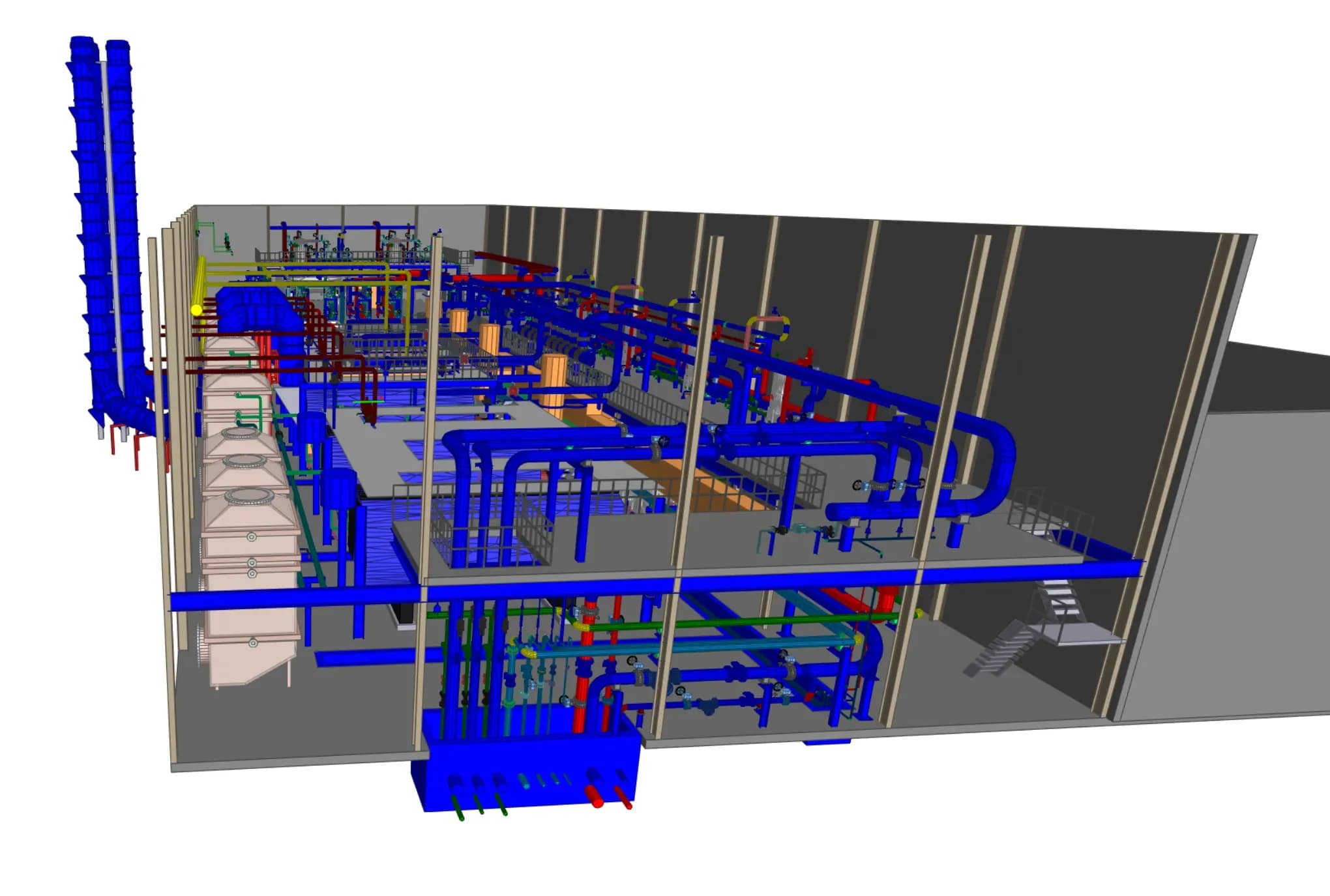
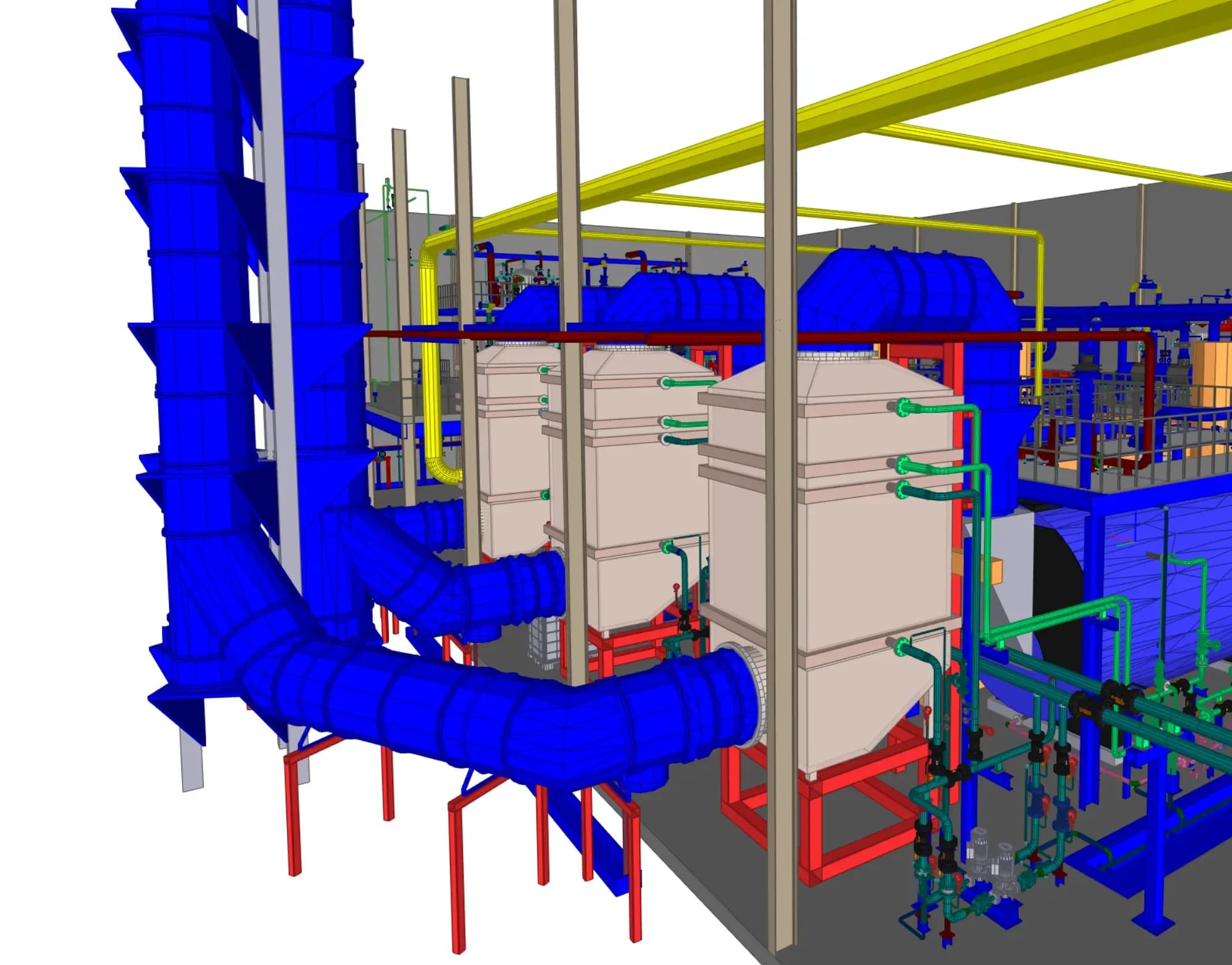
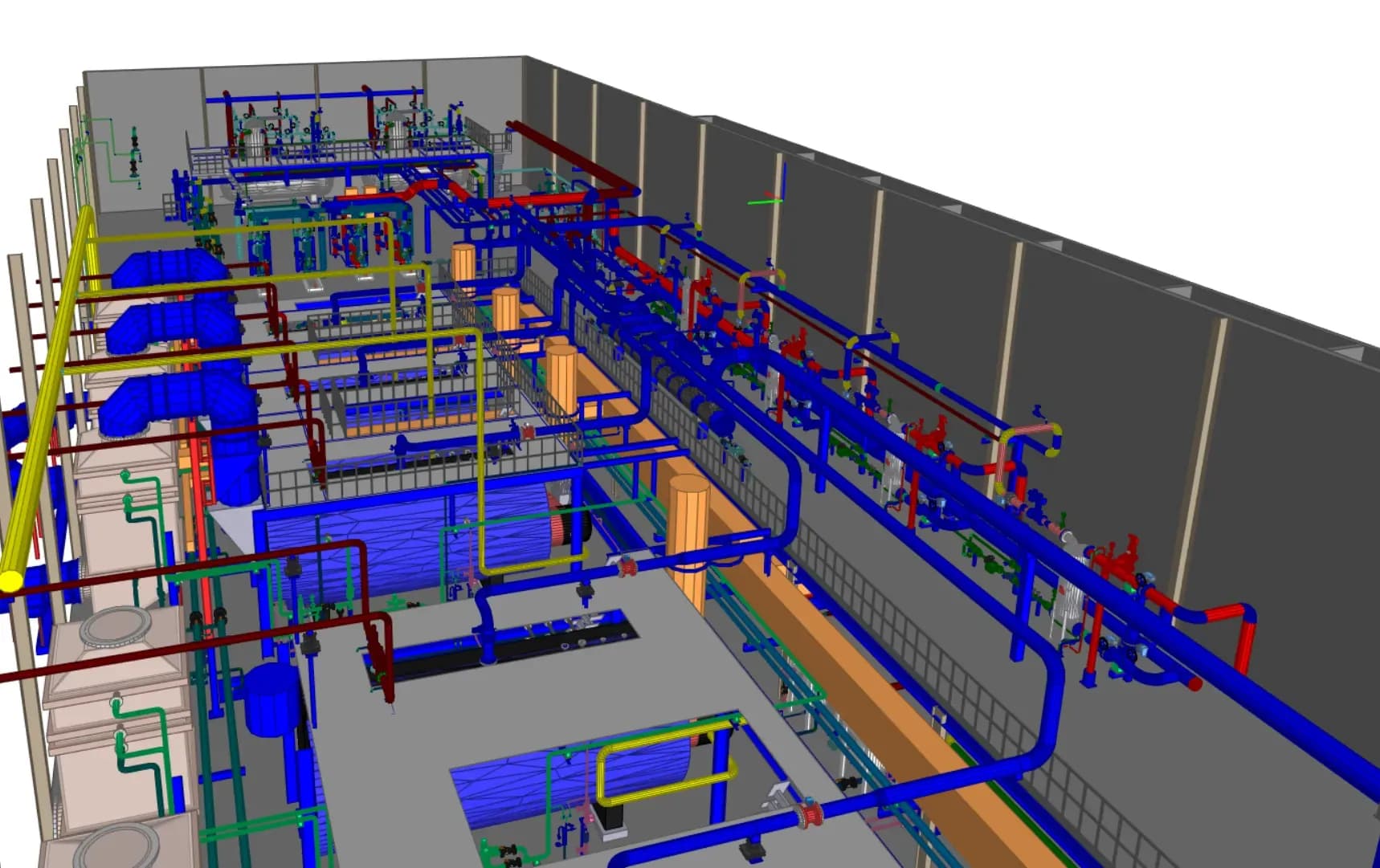
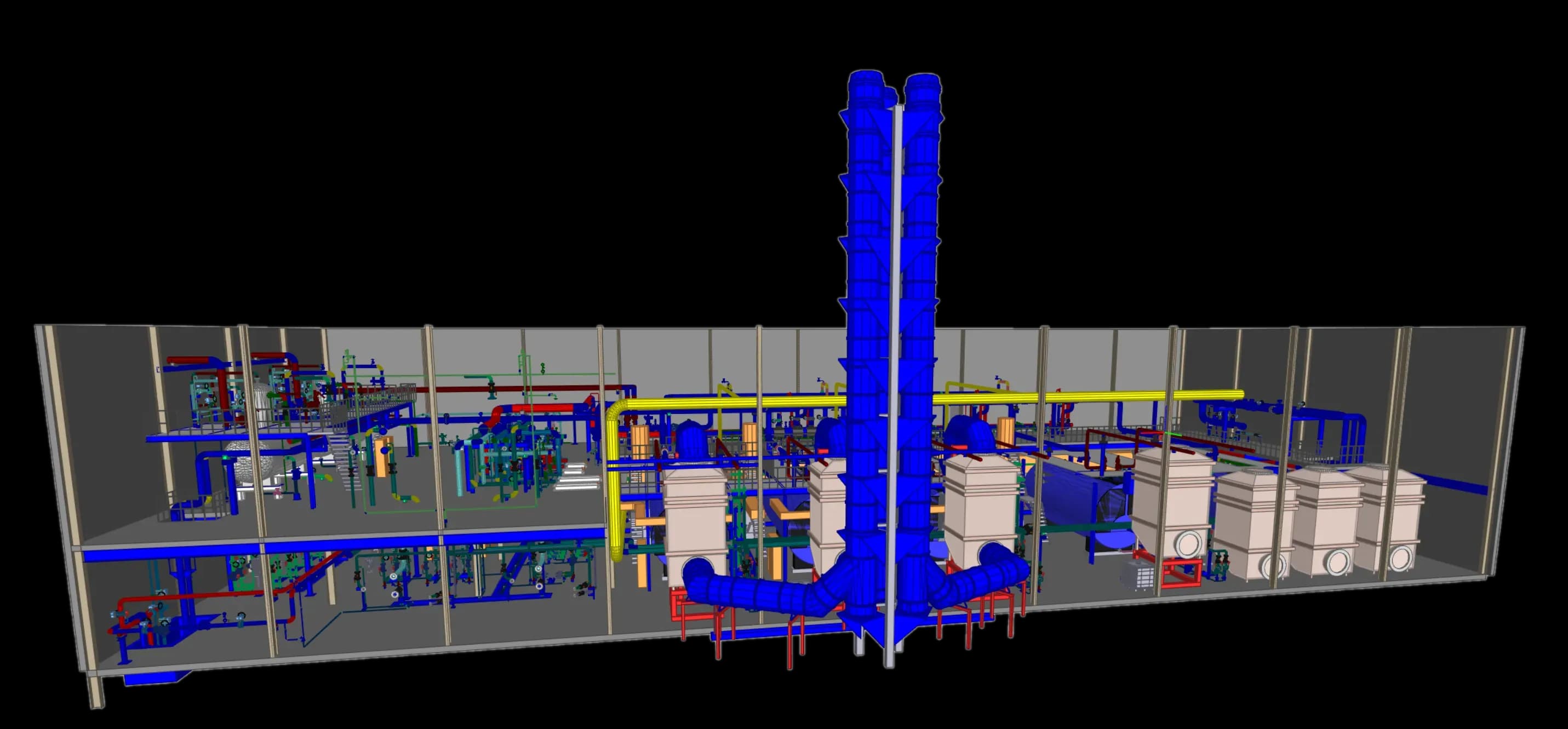
Our engineering firm undertook the comprehensive planning and design of a steam boiler house with a capacity of 100 tons of steam per hour for a site in Bavaria. The facility was designed for steam production with parameters of 1.3 MPa(i) and 195°C, and includes five boilers, each delivering 20 tons of steam per hour. In the first construction phase, three boilers will be installed, followed by two more in the second phase. The planning also included the installation of flue gas condensers behind each boiler to maximize system efficiency. The entire generated thermal energy—in the form of steam, network water, and hot water—is used to meet the technological demands of the site.
Challenges
One of the main challenges of this project was integrating the new steam boiler house into the existing infrastructure, which required a wide range of technical and spatial adaptations. The limited space on the site complicated the optimal arrangement of boilers and flue gas condensers, necessitating extremely precise planning to ensure smooth installation and future maintenance. Additionally, strict safety regulations—particularly regarding pressure vessels and flue gas systems—had to be met, requiring close coordination with approval authorities and inspection agencies.
01.05.2021 - 01.08.2022
| Tonnage | 89 | tons |
| Planning hours | 3450 | hours |
| Total area | 2685 | m² |
| Length | 60.2 | m |
| Width | 24 | m |
| Height | 12 | m |
Adress:
Bavaria, Germany
Project phases
Requirements Analysis
At the beginning of the project, a requirements analysis was conducted to define all technical, functional, and safety-related requirements for the steam boiler house. This included determining the need for a total output of 100 tons of steam per hour (with steam parameters of 1.3 MPa(i) and 195°C), to be achieved by five boilers each producing 20 tons. The division into construction phases—three boilers in phase 1 and two boilers in phase 2—was also defined during this stage.
Surveying with 3D Laser Scanning
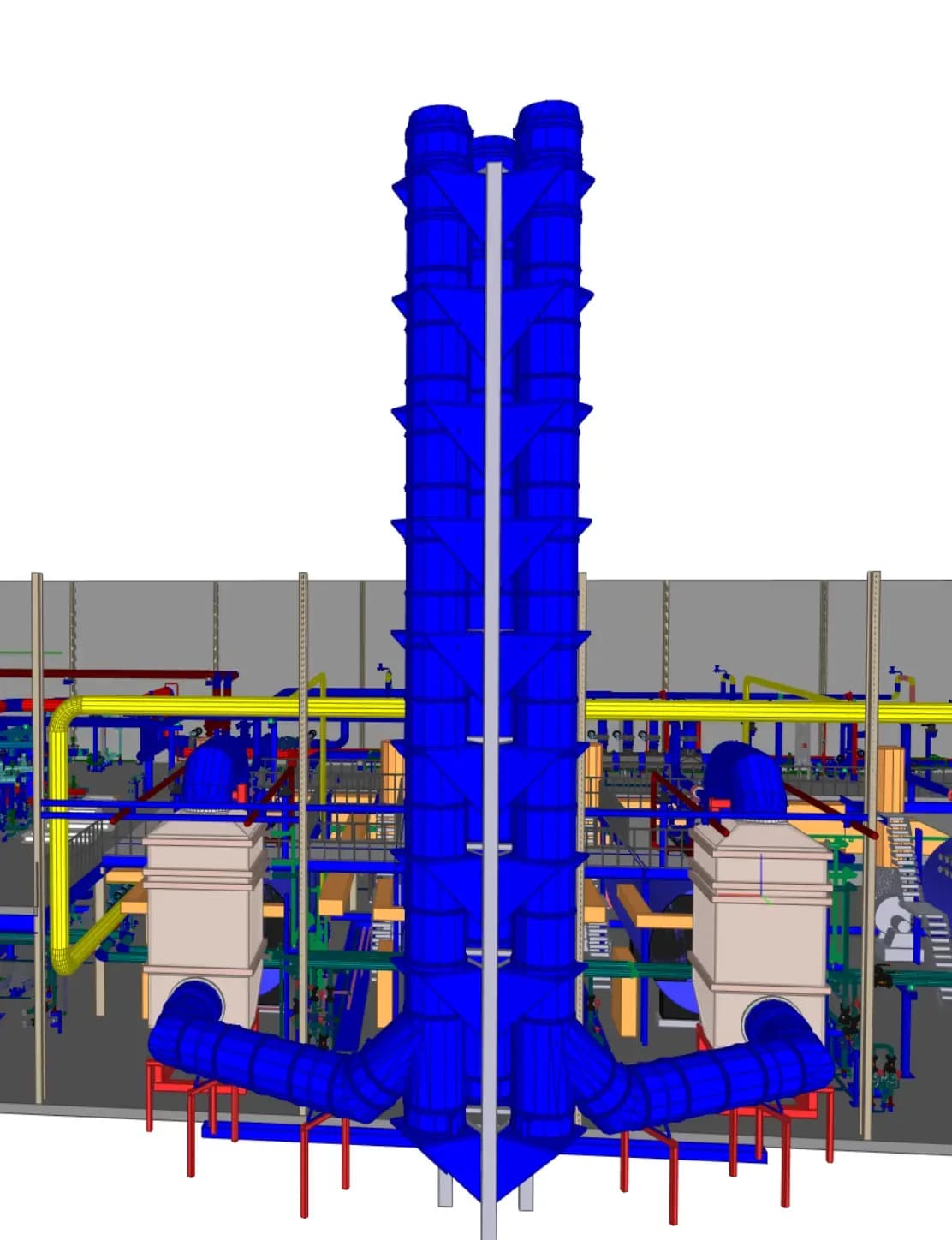
To provide a precise planning basis, the existing site and terrain were surveyed in detail using 3D laser scanning. This data provided accurate information about spatial conditions and on-site connections, which was especially crucial for planning the exhaust gas pipes with a diameter of 1,100 mm and a height of 20 meters.
As-Built Modeling
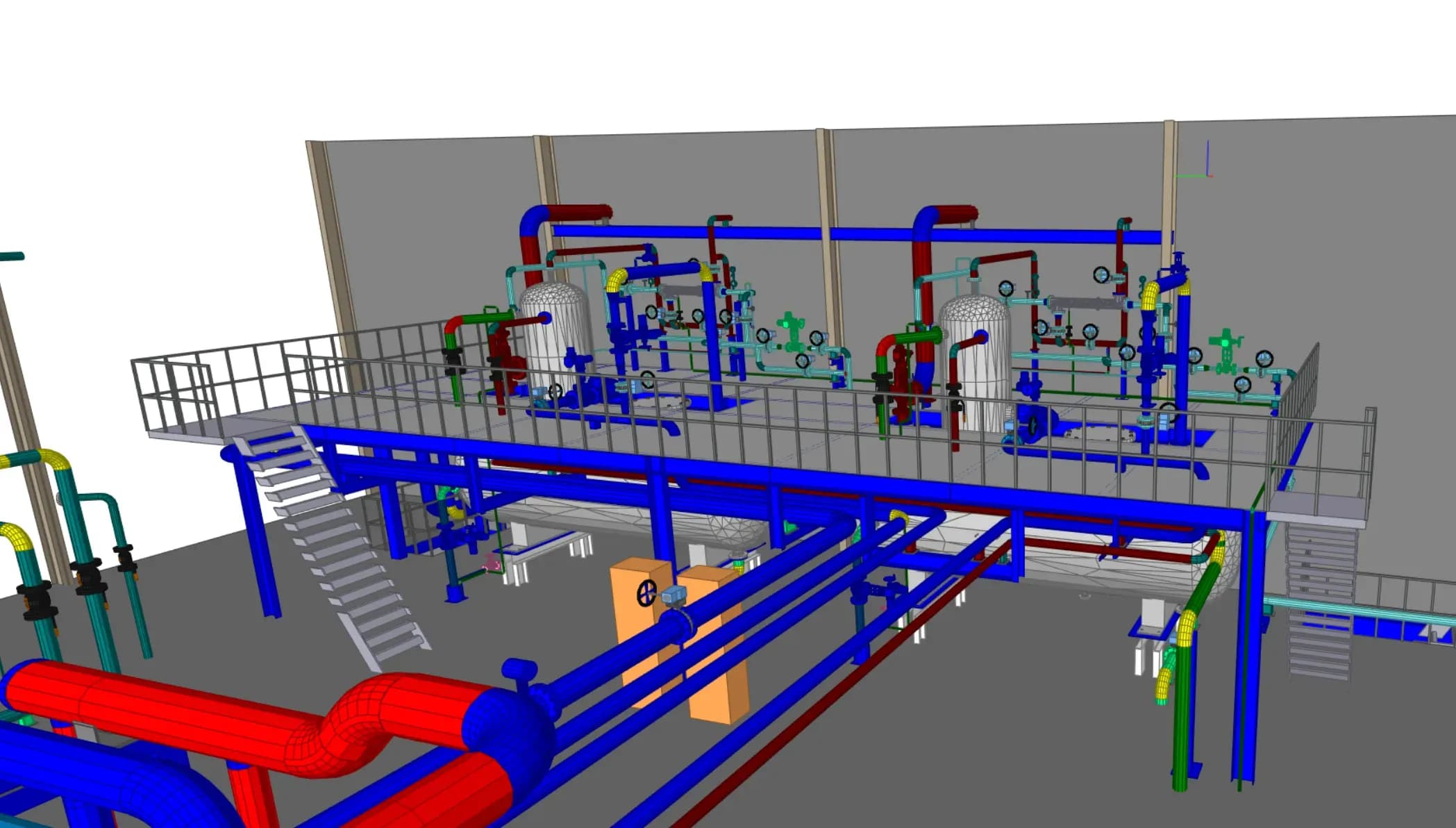
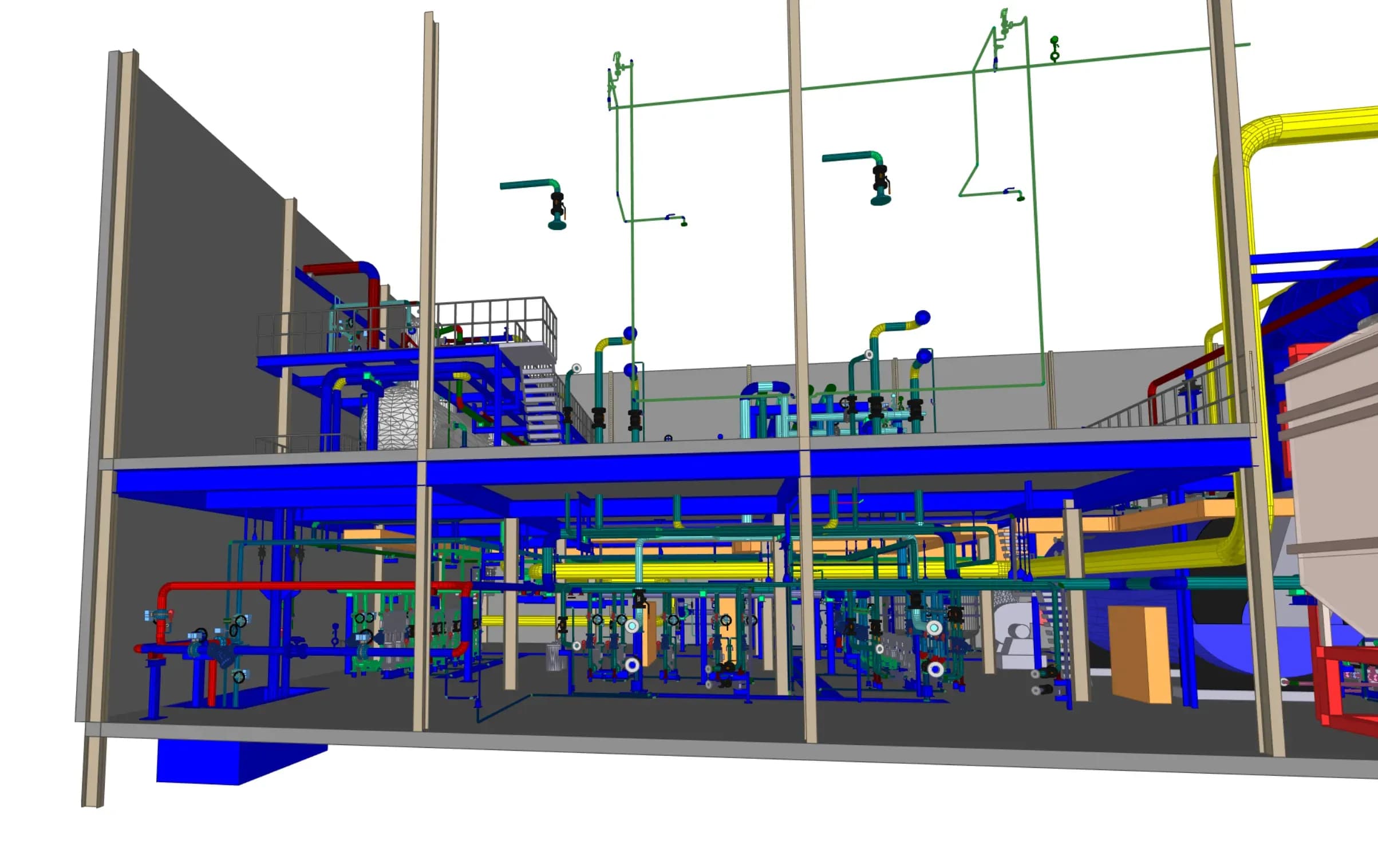
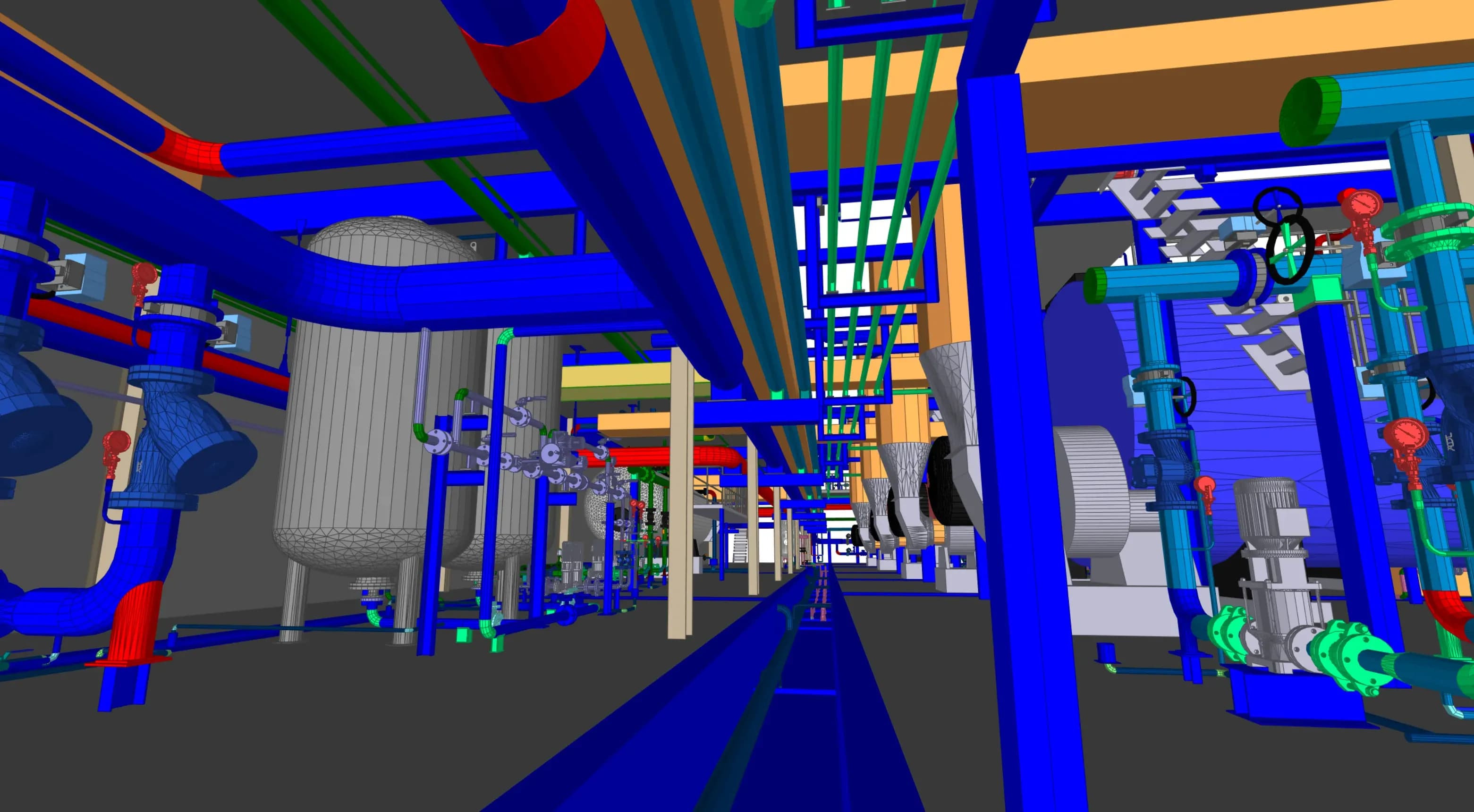
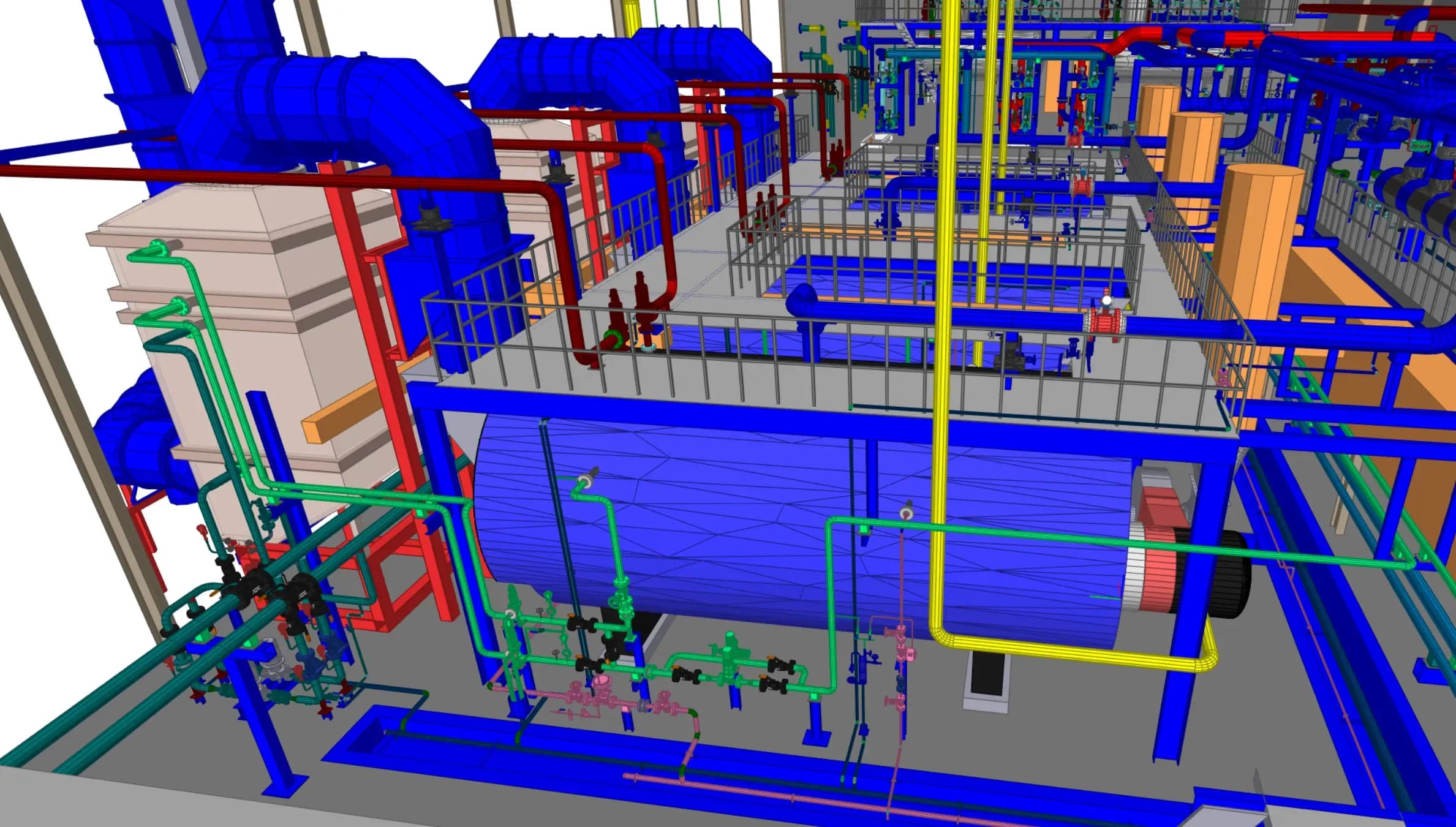
Based on the laser scan data, a digital model of the existing structures and the planned systems was created. This included not only the existing infrastructure but also the five planned boilers, their flue gas condensers, and the individual flue gas extraction system. This as-built model served as the foundation for the design and implementation planning.
Design Phase LPH 3 and Concept
During the design phase, the concept for the steam boiler house was developed in detail. In addition to the arrangement of the boilers and the positioning of the flue gas condensers, the exhaust gas pipes and central exhaust routing via a common stack were taken into account. The entire thermal energy (in the form of steam, network water, and hot water) was planned to meet the facility's technological needs. This design was finalized in coordination with the client and prepared for the next planning phase.
Approval Planning LPH 4
The approval planning included the detailed elaboration of the design to ensure it could be approved. All safety-relevant and technical aspects—including the prefabricated gas pipes and exhaust ducts—were specified and finalized in this phase to enable official approval.
Implementation Planning LPH 5
In the implementation planning phase, precise workshop and construction drawings were created, defining all details for the fabrication and installation of the system. Particular focus was placed on fitting the boilers and flue gas condensers into the limited space and coordinating the exhaust routing through the central stack. The plans included all details for installing the gas lines and exhaust systems to ensure smooth on-site execution.
Galery