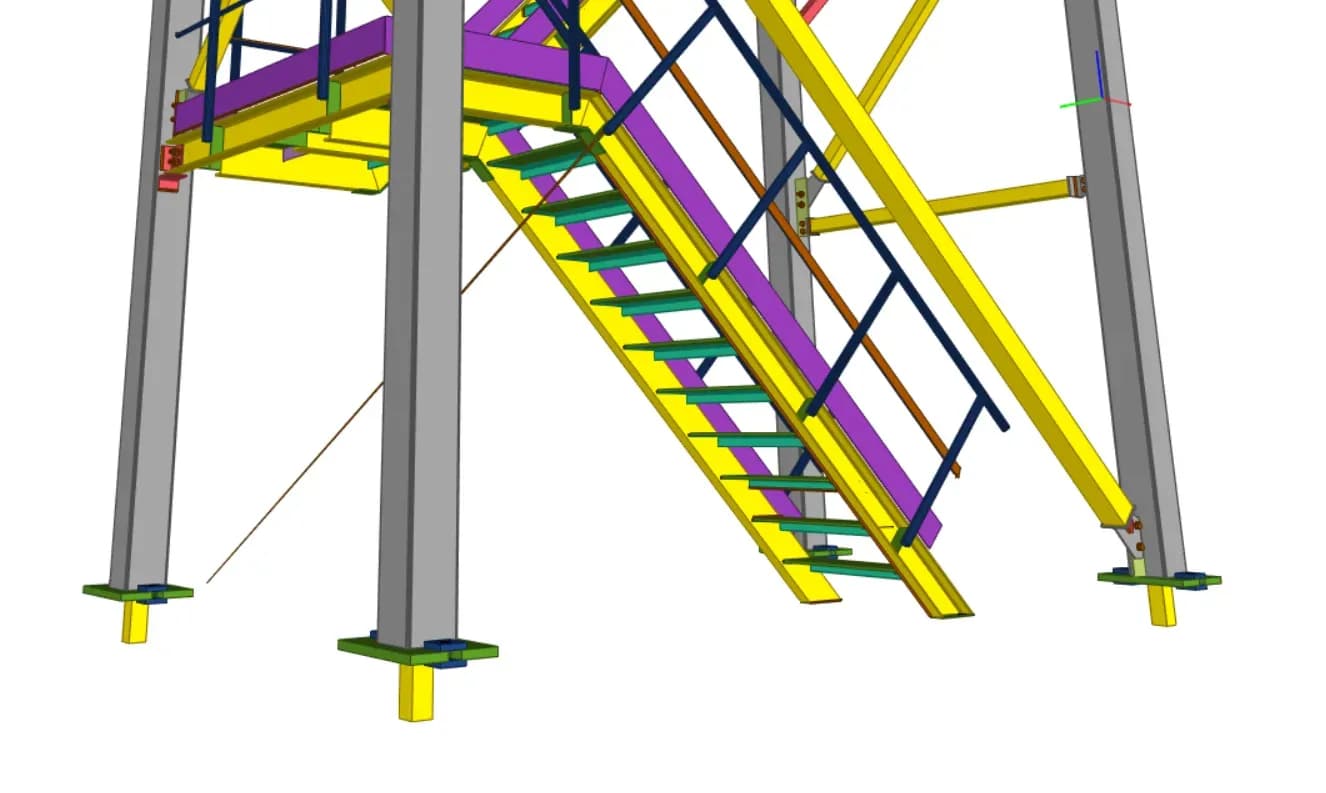
Stair Tower, Bavaria
As part of an industrial project in Bavaria, our engineering firm designed a steel stair tower. The steel structure serves as an access solution for various levels of an industrial building, enabling safe and efficient access for maintenance personnel and technical inspections. Our scope of work included a detailed survey of the site conditions, development of a precise digital model, and execution of structural calculations to ensure safety. We also created workshop and assembly drawings that account for all material, connection, and installation sequence requirements to guarantee smooth fabrication and erection.
Challenges
One of the main challenges was precisely adapting the stair tower to the building's existing structures and the limited space available on site. Additionally, strict safety and load-bearing requirements complicated the structural planning, as the tower must withstand heavy loads and varying weather conditions. Coordinating between different planning phases while meeting all technical and safety specifications proved particularly demanding, requiring close collaboration with all project stakeholders.
01.05.2019 - 01.08.2019
| Weight | 7.3 | tons |
| Planning hours | 120 | hours |
| Total area | 75 | m² |
| Length | 5 | m |
| Width | 3 | m |
| Height | 22.5 | m |
Adress:
Bavaria, Germany
Project phases
Requirements Analysis
The initial phase involved detailed documentation and analysis of client requirements. Discussions covered desired functionalities, tower specifications, and safety, load-bearing, and placement criteria. The objective was to establish all technical and functional requirements for the construction to create a clear foundation for subsequent planning phases.
Surveying with 3D Laser Scanning
3D laser scanning captured existing conditions and site topography. This method provided precise, detailed as-built data serving as the modeling basis. The scanning process recorded even minute details of existing structures, which proved particularly valuable for adapting and integrating the new construction.
As-Built Modeling
Using the laser scan data, we created a digital model of the existing building and all relevant components. This model served as a reference for stair tower planning and helped identify potential clashes and adaptation needs early, ensuring precise integration of the structure.
Design Phase (LPH 3) and Concept
This design phase developed initial technical and architectural concepts meeting both functional requirements and mandated safety standards. The design included preliminary structural calculations, material proposals, and placement planning for the tower's integration with the existing building.
Approval Planning (LPH 4)
The approval planning phase further refined designs and concepts for client authorization. This stage involved detailed technical coordination and production of all necessary approval documents, finalizing planning content for the subsequent execution phase.
Execution Planning (LPH 5)
The final execution planning phase produced detailed workshop and assembly drawings. These documents contained all fabrication and installation information, including material lists, connection details, and erection sequences. Precise component documentation ensured flawless manufacturing and on-site assembly of the stair tower.
Galery
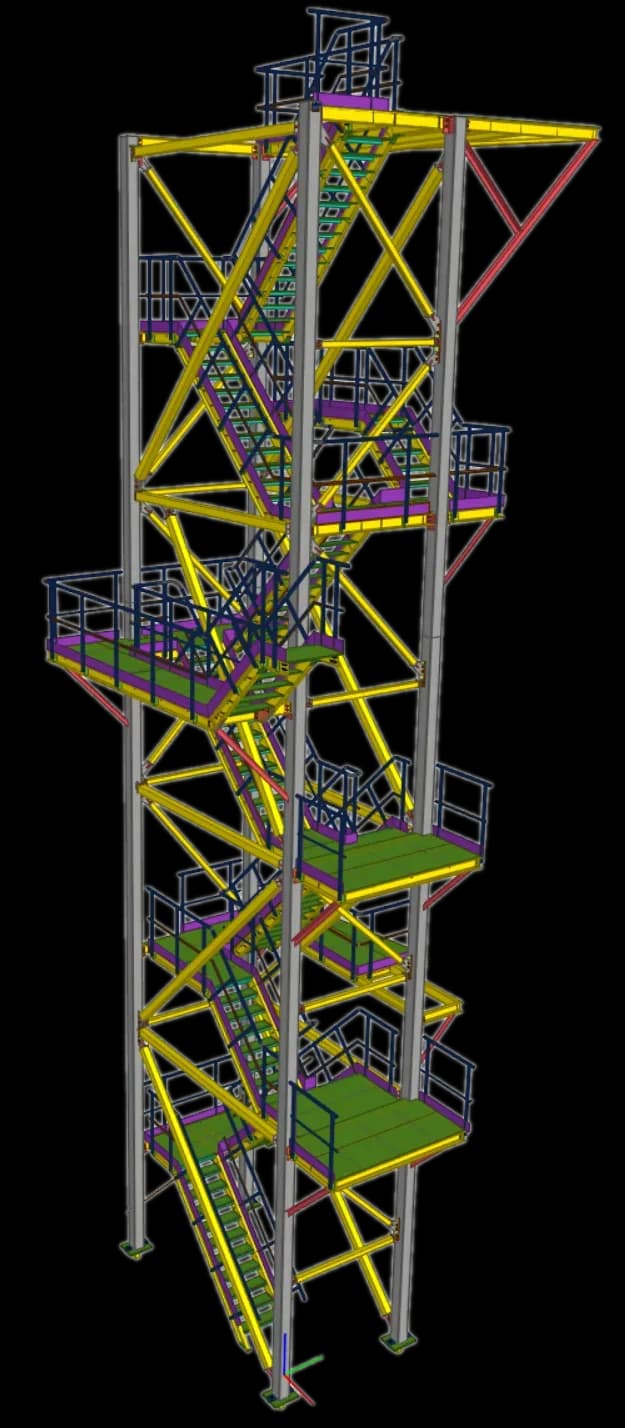
Main view
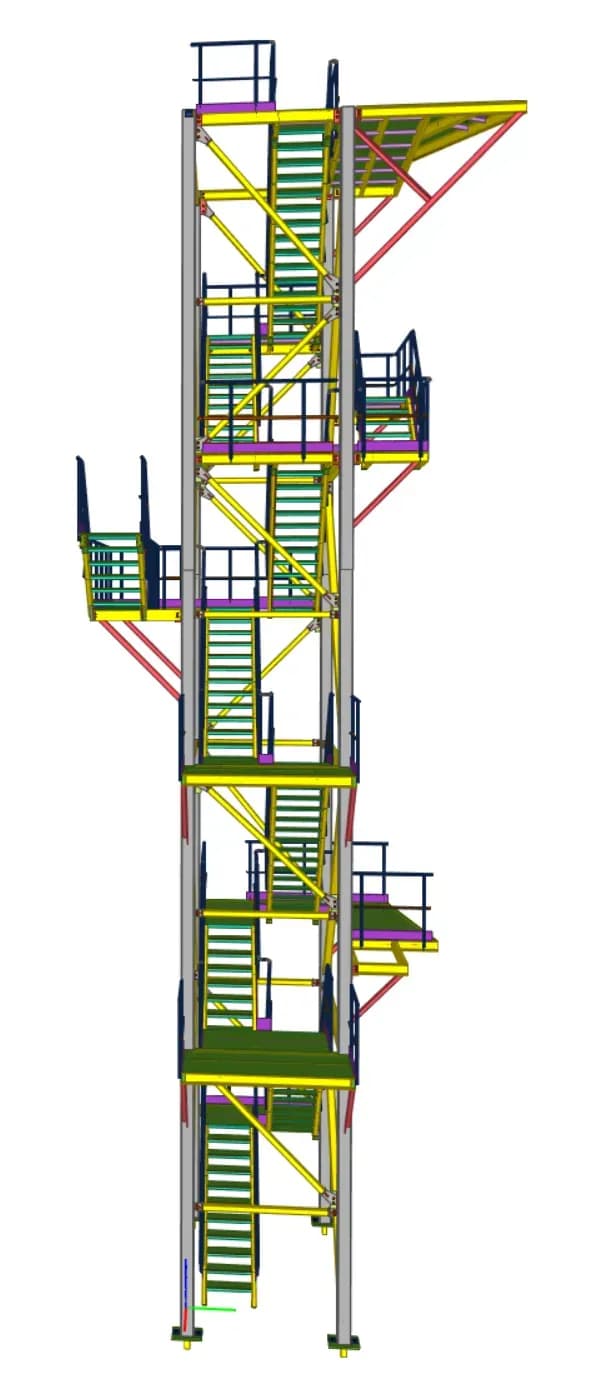
View from right side
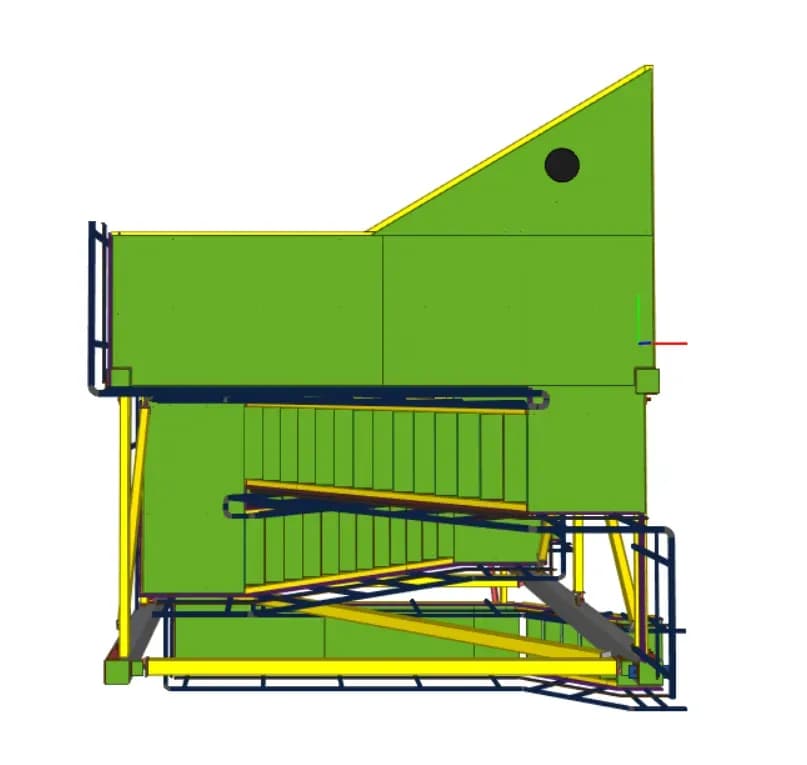
Upper view
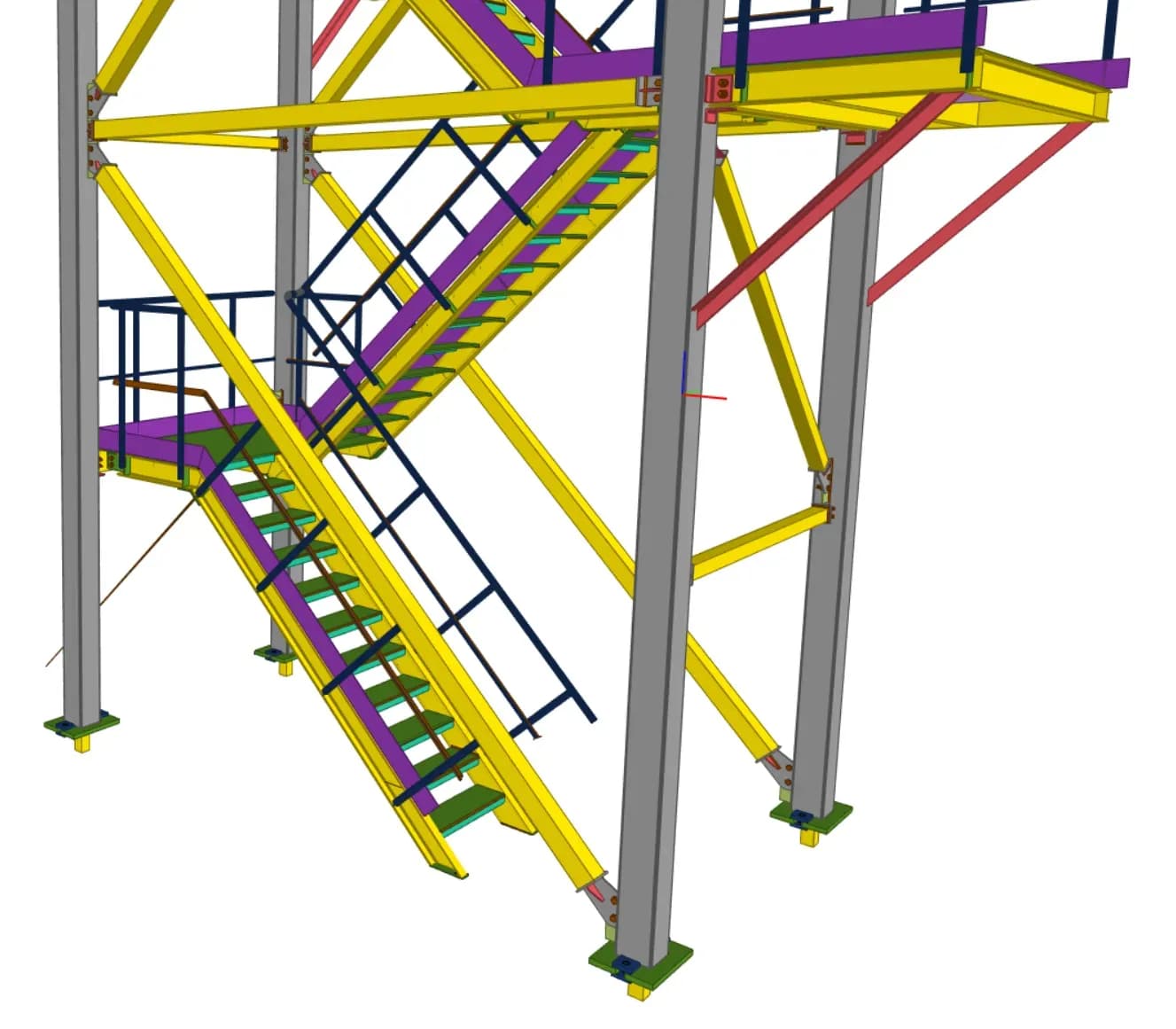
1st floor