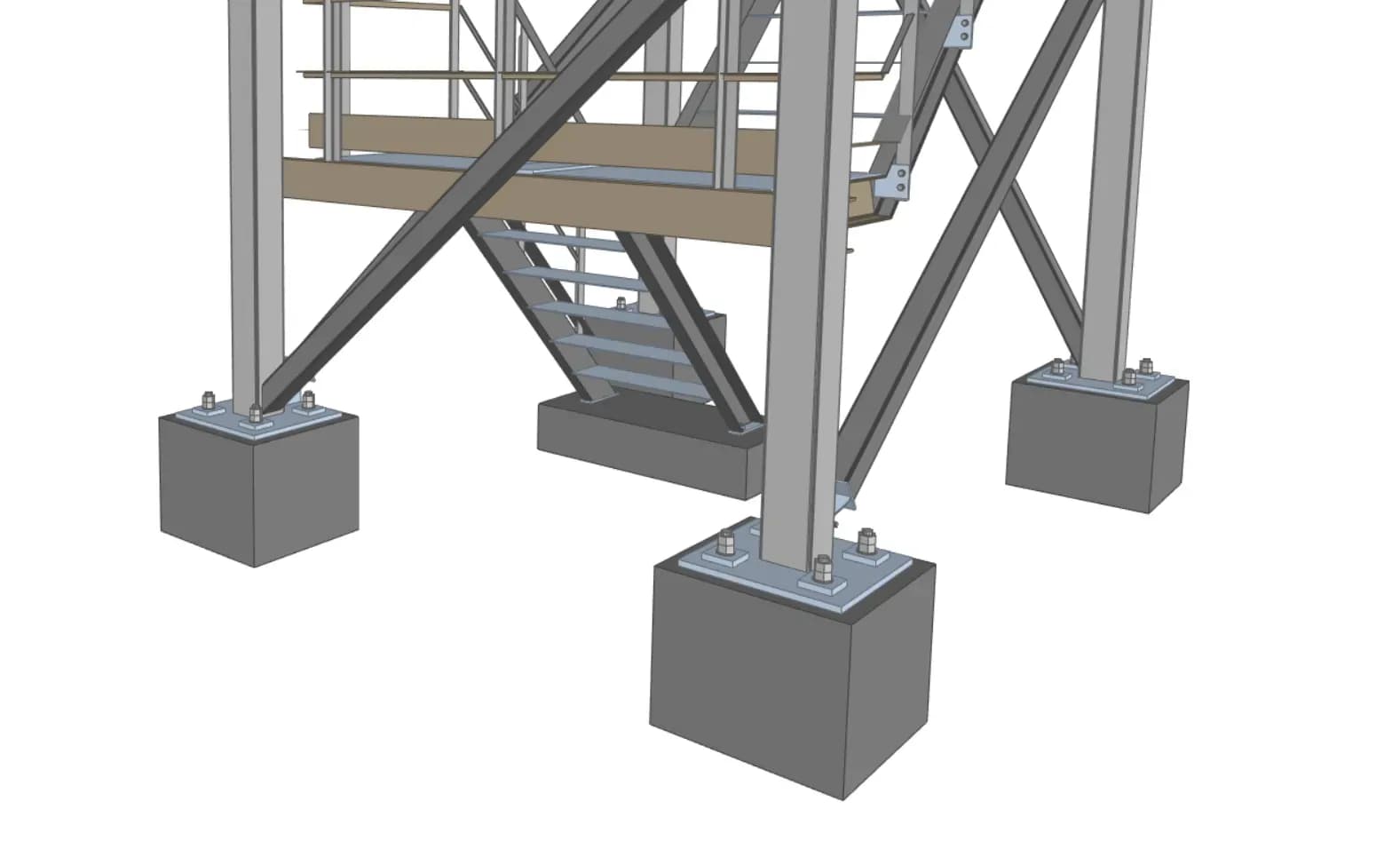
Stair Tower, Bavaria
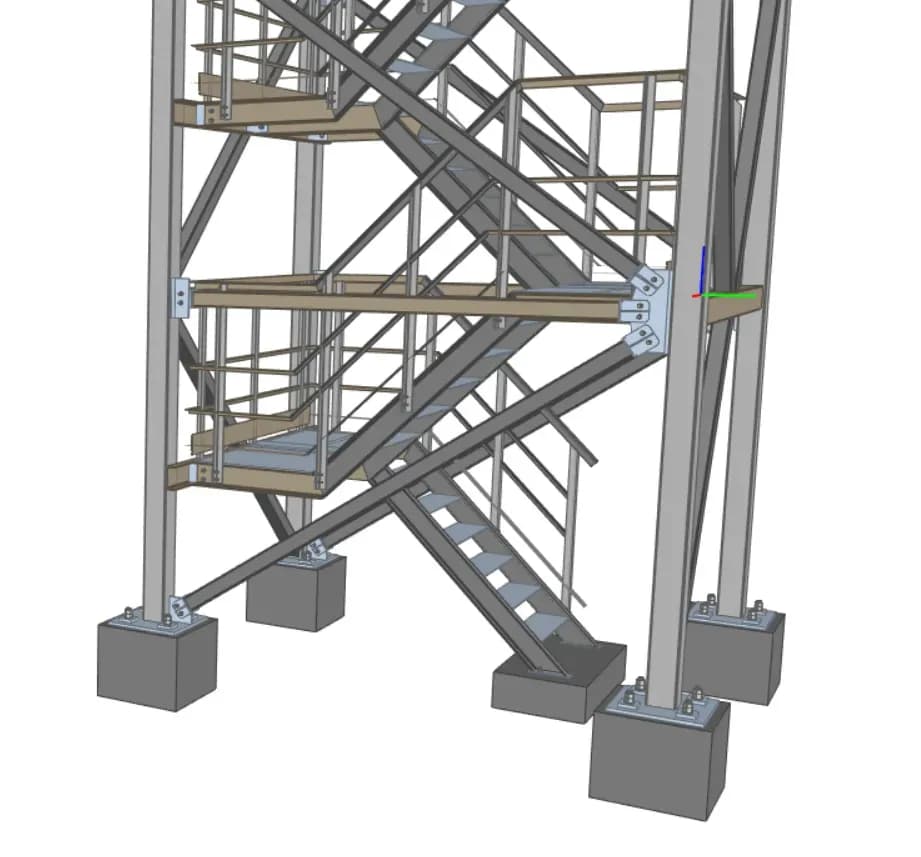
The stair tower serves as an access solution for employees, providing safe and functional access to the upper levels of the production hall. The steel structure was designed to meet both the architectural requirements of the existing building and the specific loads and safety standards of industrial facilities. During the planning phase, a detailed survey of the existing building was conducted, and a 3D model of the steel structure was created to ensure optimal integration of the stair tower into the existing structure. Structural calculations were performed to guarantee the load-bearing capacity and safety of the construction. Precise workshop drawings were prepared for the fabrication of steel components, and assembly plans were developed to ensure smooth on-site installation.
Challenges
One of the main challenges of this project was the precise adaptation of the steel structure to the existing building infrastructure. The integration of the stair tower into the existing hall proved particularly complex due to varying heights and limited space conditions. Additionally, the structural requirements imposed by the intended use and specific loads of the industrial hall were highly demanding, necessitating meticulous planning and close collaboration between engineers and manufacturers. The coordination of workshop and assembly plans, along with the timely delivery and installation of steel components, were also critical factors in ensuring project success.
01.02.2018 - 01.05.2018
| Structural weight | 21 | tons |
| Engineering hours | 348 | hours |
| Footprint area | 80 | m² |
| Length | 3.5 | m |
| Width | 2.5 | m |
| Height | 20 | m |
Adress:
Bavaria, Germany
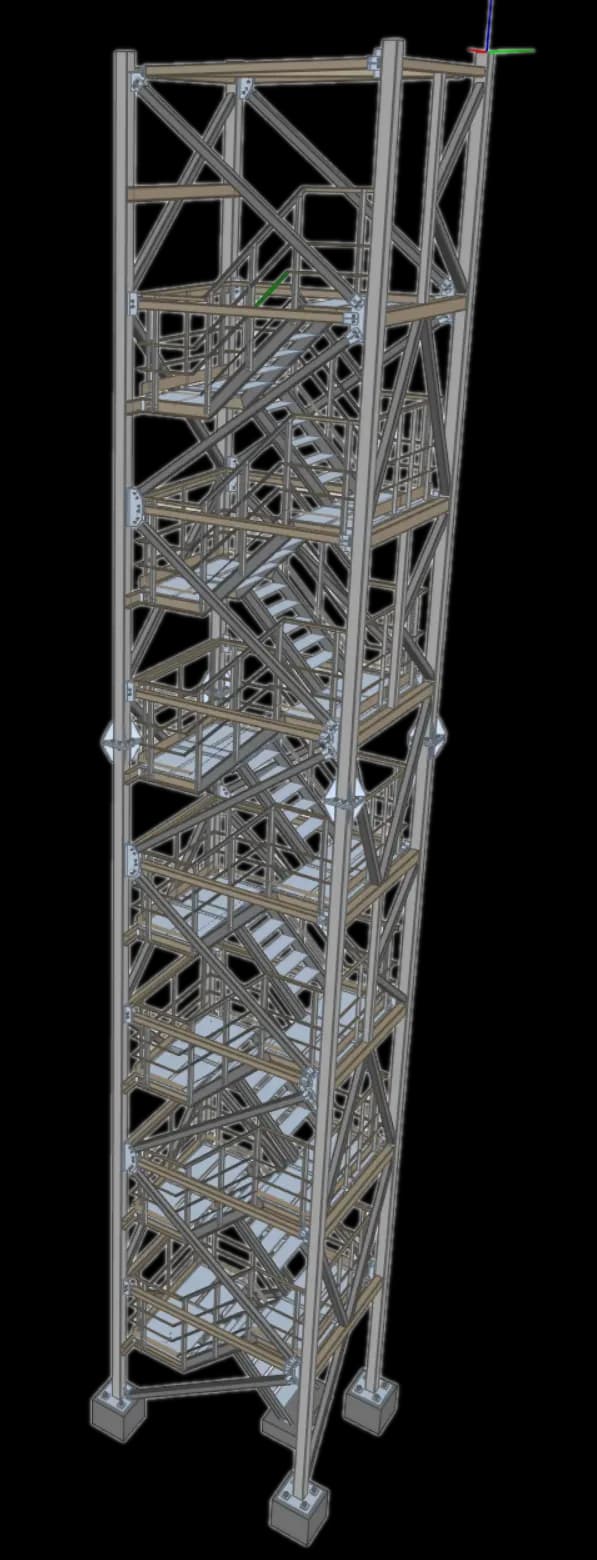
Project phases
Requirements Analysis
The initial phase involved a comprehensive requirements analysis to identify all essential technical, safety-related, and operational project requirements. This process considered the specific needs of the industrial plant, including load capacity, accessibility, and safety regulations. The phase also included coordination with stakeholders such as facility management and stair tower users to ensure all requirements were fully and accurately captured.
Surveying with 3D Laser Scanning
3D laser scanning technology was employed for precise documentation of the existing building and surrounding area. This innovative technology enabled exact and detailed measurement of the existing structure and its environment, documenting all relevant geometric and architectural conditions. The 3D model served as the foundation for subsequent planning and modeling of the steel structure.
As-Built Modeling
Based on the laser scanning data, the existing structure was digitally reconstructed in CAD systems. All relevant structural elements including walls, ceilings, columns, and existing infrastructure components were integrated into the digital model. This detailed as-built modeling formed the basis for planning and ensured precise adaptation of the steel structure to the existing building.
Design Phase (LPH 3) and Concept
This phase developed the steel structure design and fundamental concept of the stair tower. Detailed planning addressed functionality, step arrangement, handrails, and access points. Material selection and aesthetic considerations were also incorporated to create a solution that is both functional and visually appealing. The design was coordinated closely with the client and approved by all stakeholders.
Approval Planning (LPH 4)
Following the design phase, the approval planning stage involved detailed technical development of the stair tower. This included creation of construction drawings specifying all structural details such as connection elements, dimensions, and fabrication requirements. All necessary calculations and verifications, particularly structural analysis, were completed, and documentation was prepared for regulatory approval.
Execution Planning (LPH 5)
The execution planning phase produced final workshop drawings and assembly plans. These documents contained all necessary information for steel fabrication, including detailed measurements, material specifications, and manufacturing techniques. Assembly plans were developed to ensure correct and efficient on-site installation. This phase also established timelines for manufacturing and erection to maintain project schedule compliance.
Galery
Main view
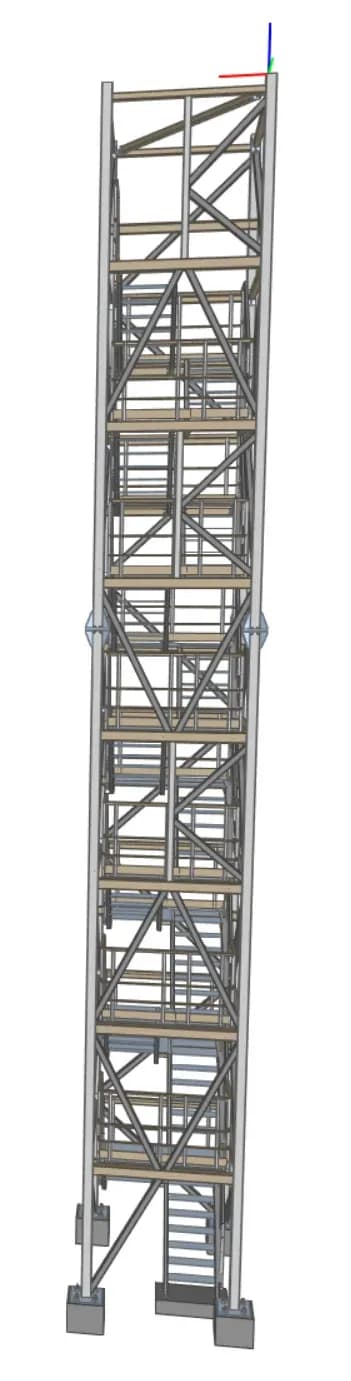
View from right side
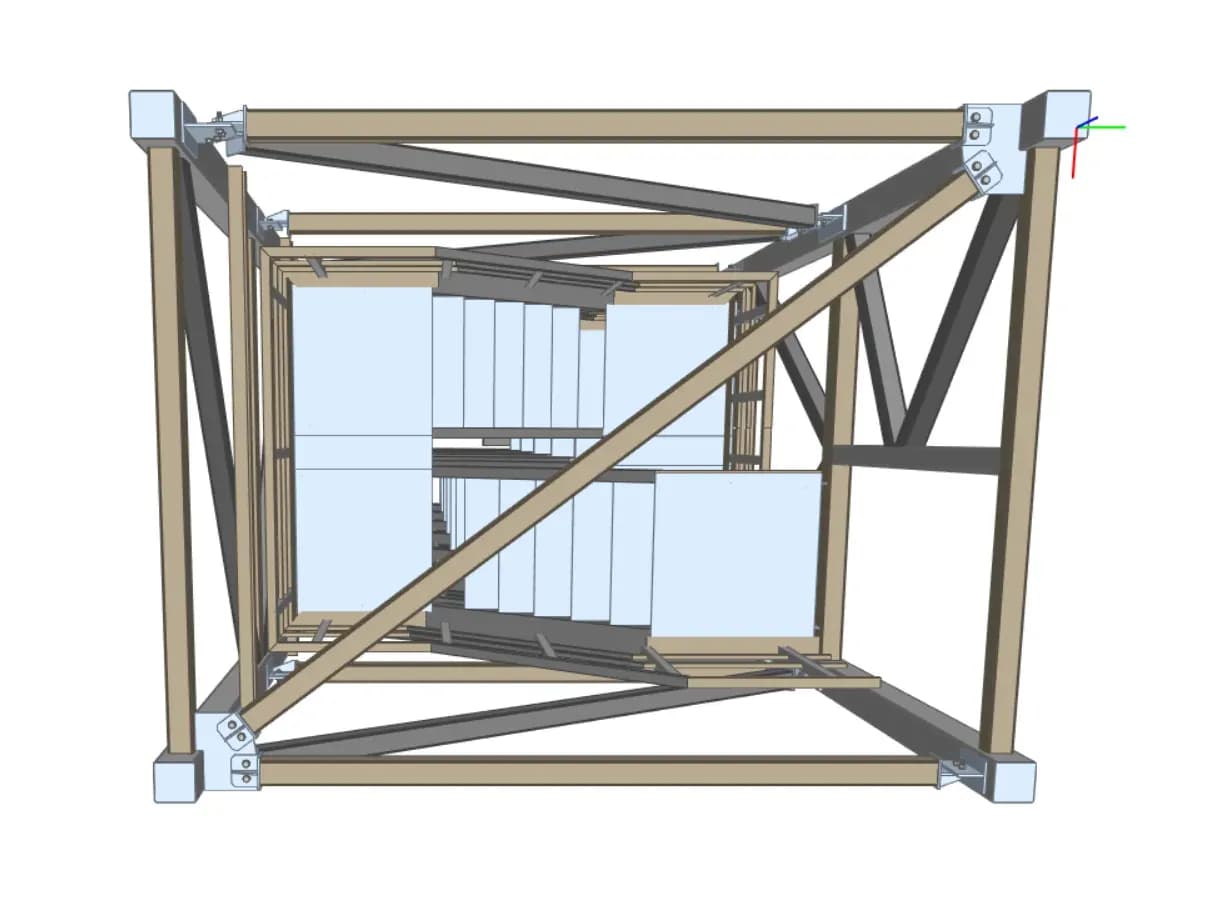
Upper view
1st floor