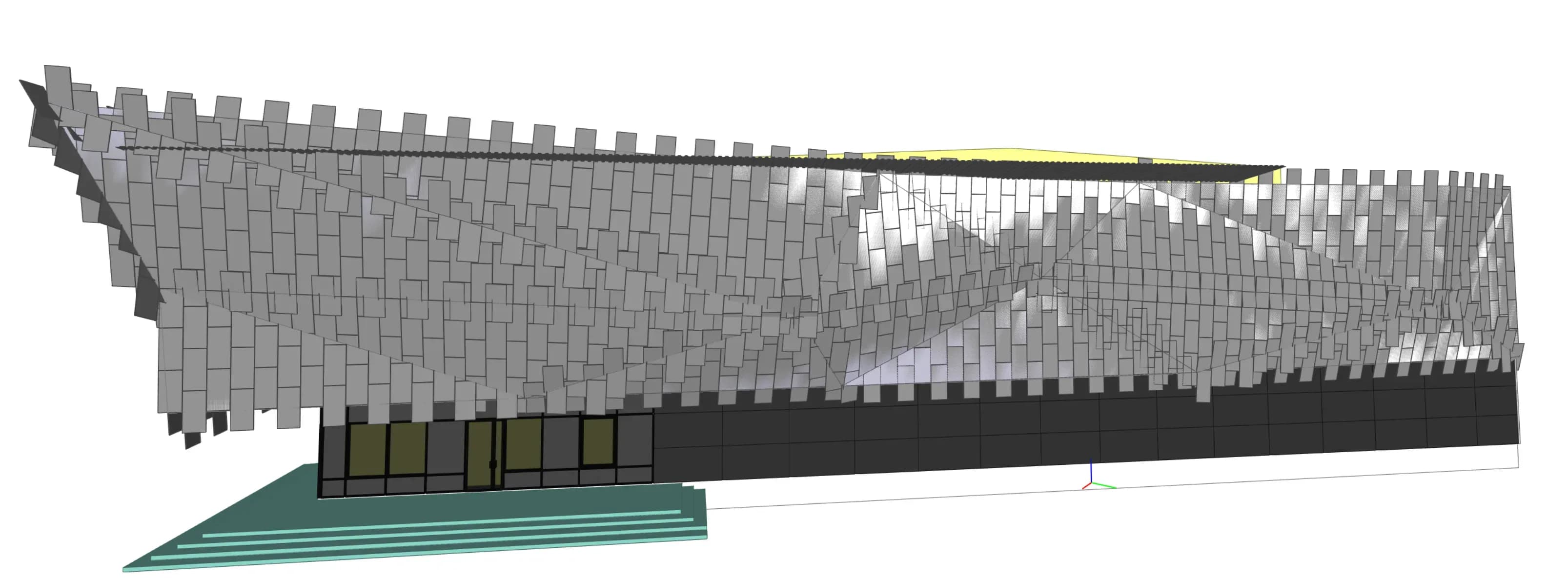
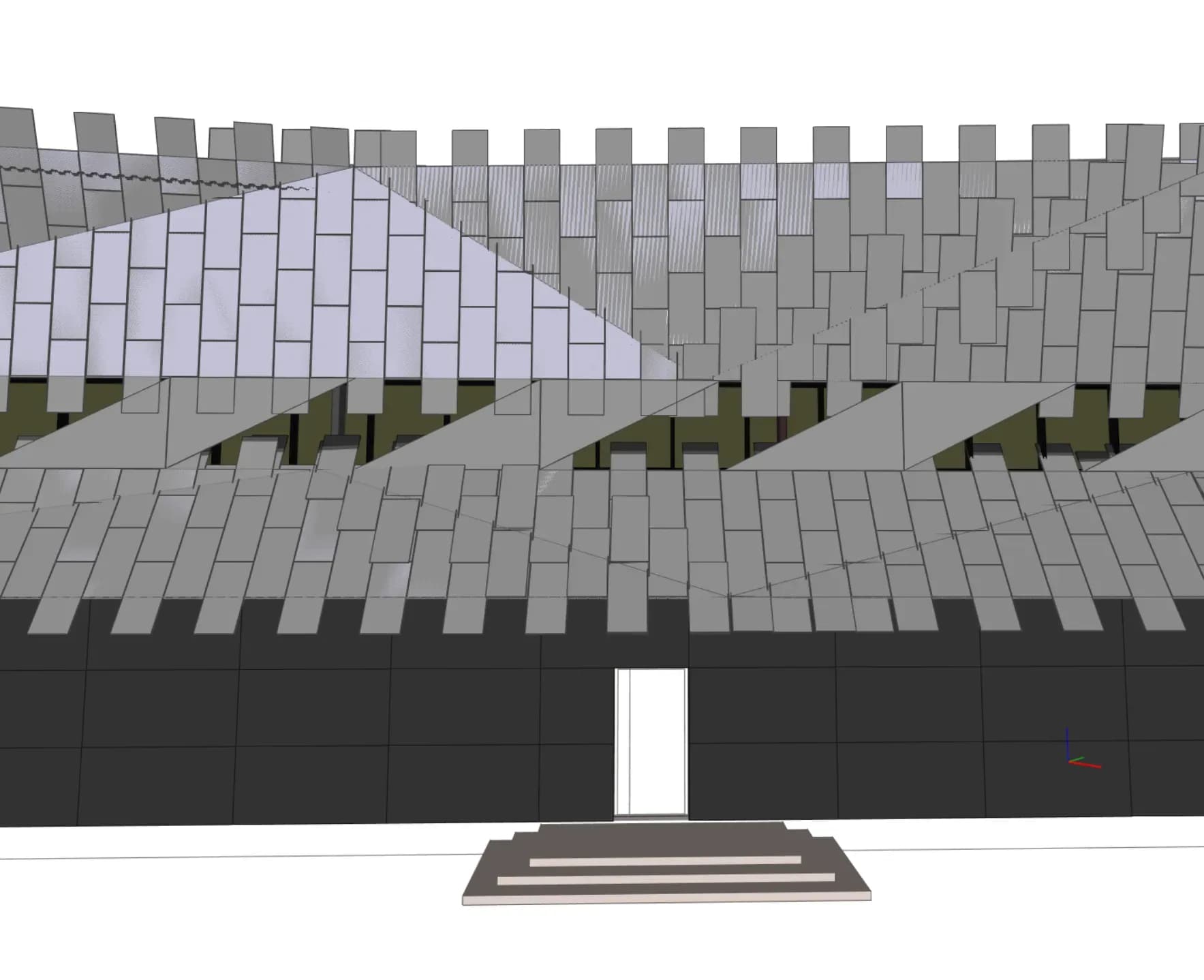
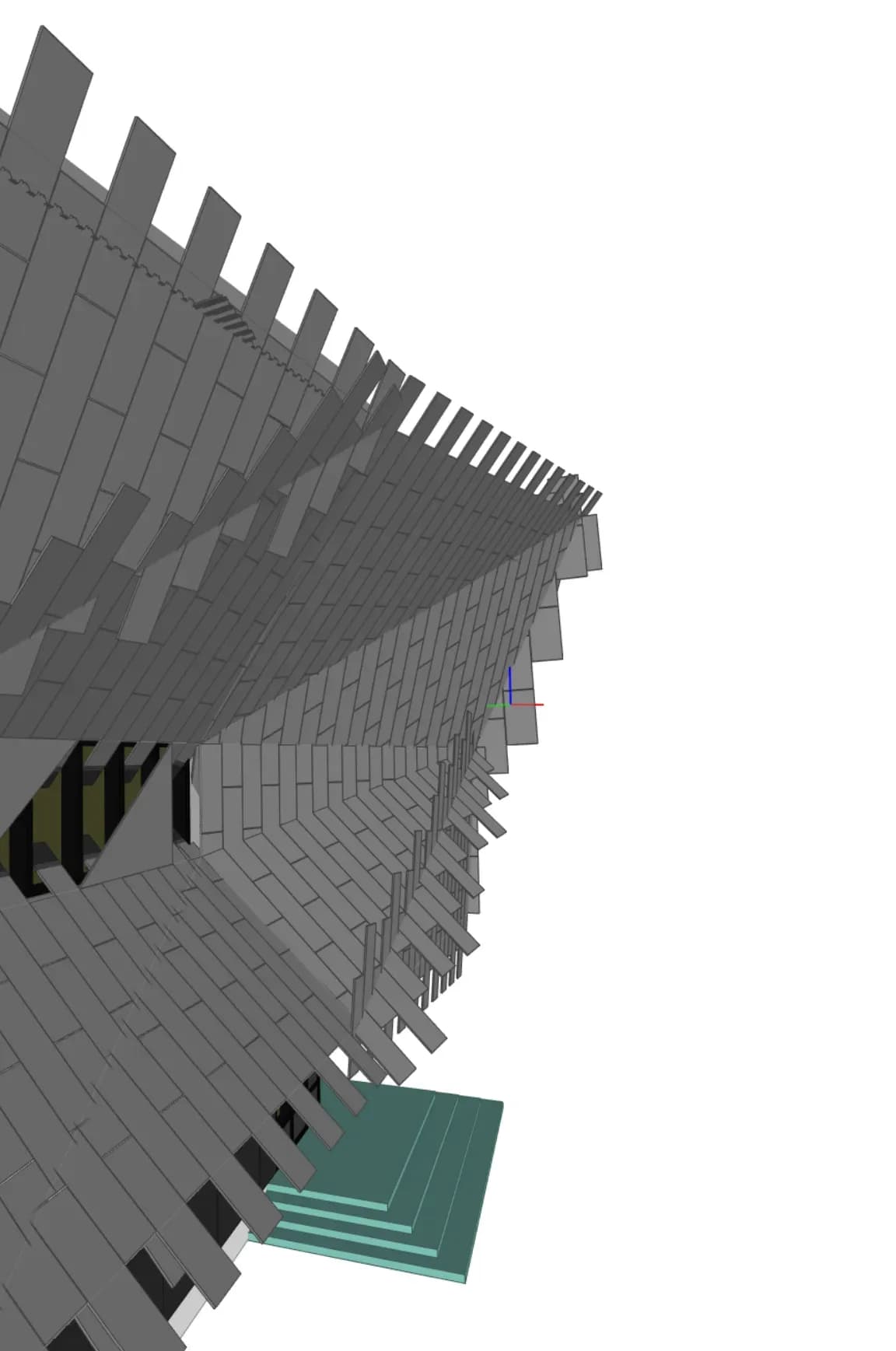
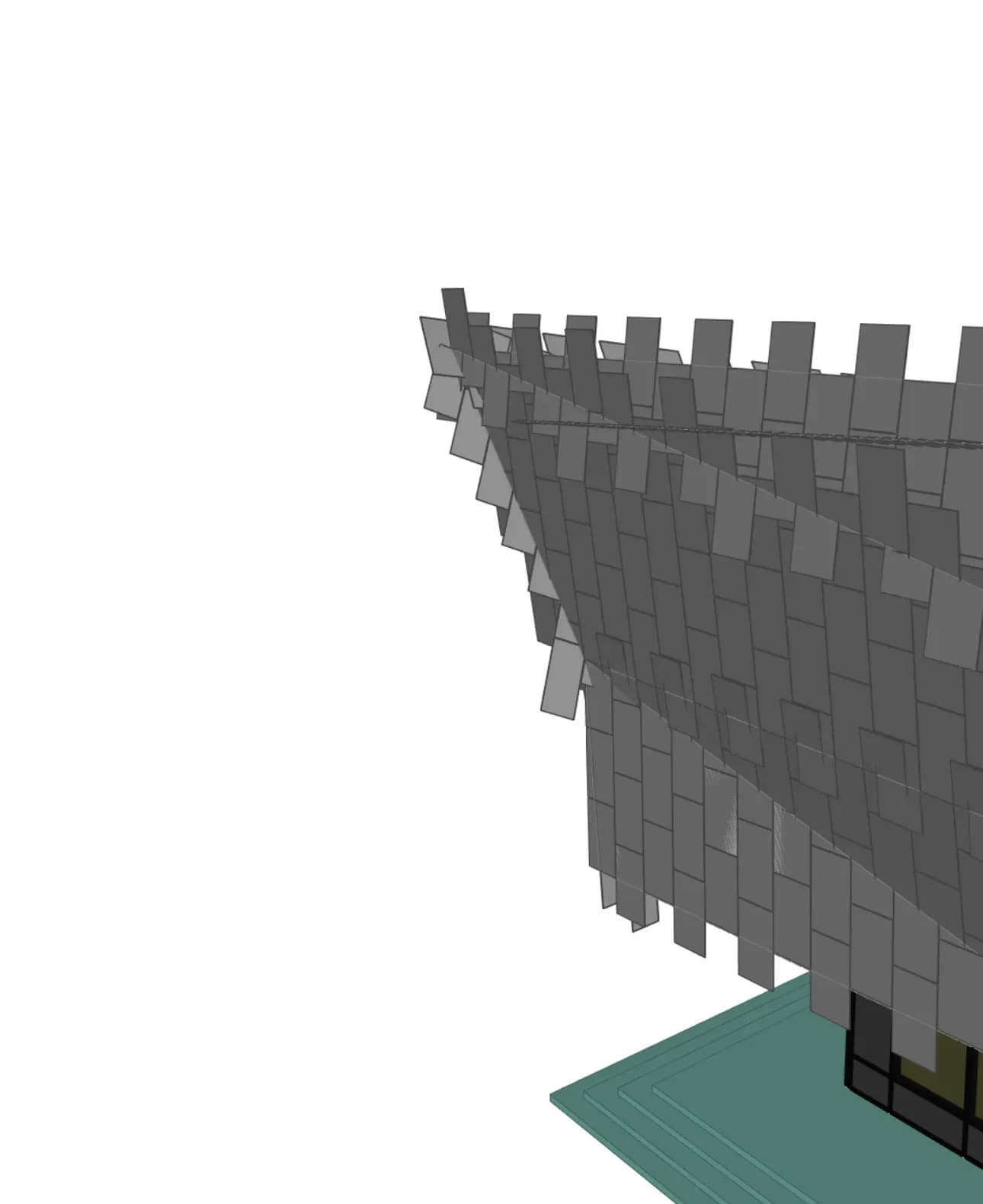
Renovation concept for the shopping center
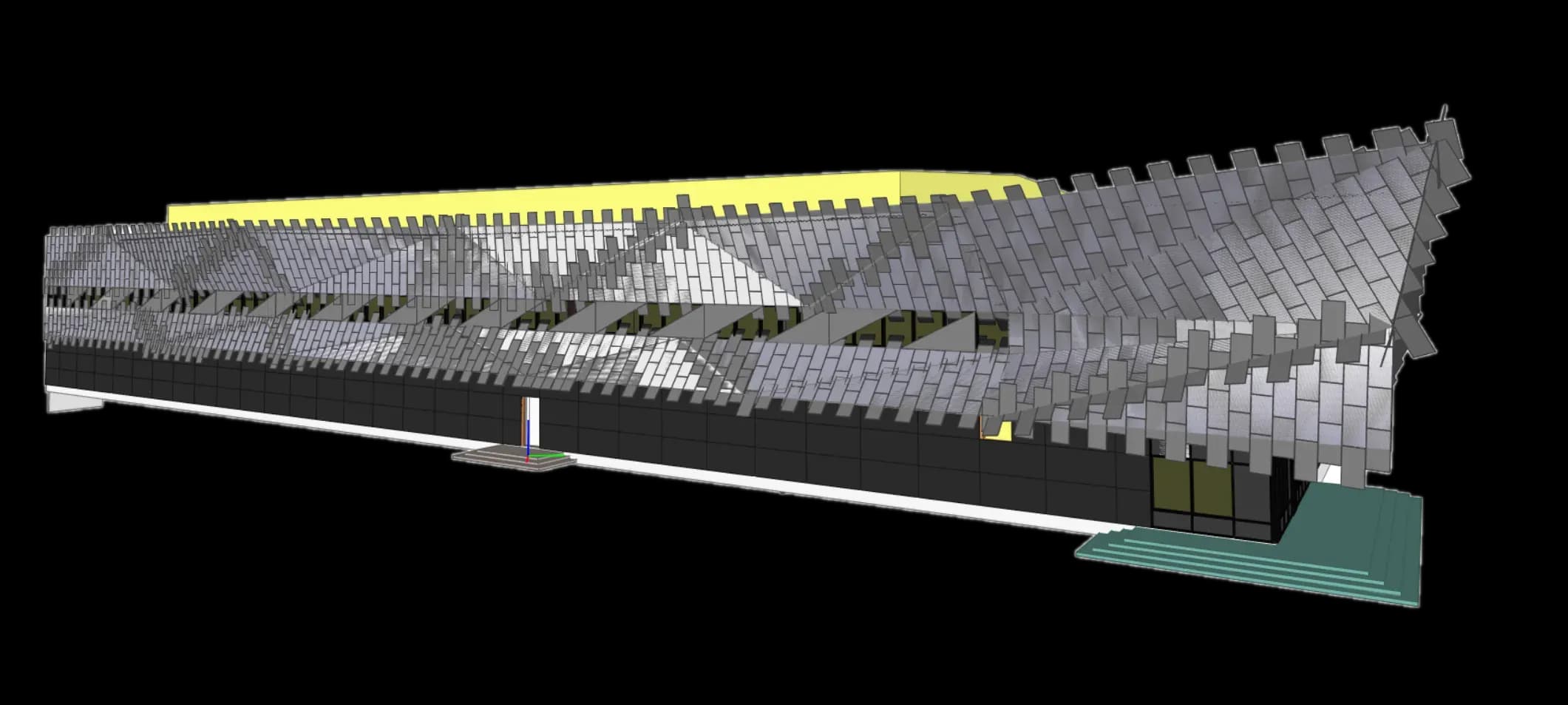
The goal is to modernize the building's exterior appearance while simultaneously optimizing structural stability and energy efficiency. The steel structure is intended to support the new façade cladding, providing a lightweight yet robust framework that adapts to the existing building conditions and allows for flexible design. Our tasks included a detailed survey of the existing building and the creation of a digital 3D model to facilitate the development of structural calculations and workshop drawings. Based on this, we developed customized construction plans that enable the precise installation of the steel structure and façade elements, meeting the design requirements of the modernization project.
Challenges
One of the biggest challenges of the project was integrating the new lightweight steel structure into the existing, partly complex structure of the shopping center. Due to the building's various construction phases and materials, the structural analysis required extensive adjustments to properly plan loads and anchoring points. Additionally, we had to account for tight timeframes and ongoing operations of the shopping center, making the coordination of construction plans with the executing trades especially demanding.
01.02.2018 - 01.05.2018
| Tonnage | 28 | tons |
| Planning hours | 950 | hours |
| Total area | 10600 | m² |
| Length | 86 | m |
| Width | 46.5 | m |
| Height | 11 | m |
Adress:
Hesse, Germany
Project phases
Requirements Analysis
In this phase, we worked together with the client to define the specific requirements and objectives for the shopping center façade renovation project. This included both technical and design-related aspects, as well as considerations such as energy efficiency, sustainability, and the requirements for the lightweight steel structure. The requirements analysis formed the foundation for the following planning stages and ensured that all relevant factors were incorporated into the project.
3D Laser Scanning Survey
A 3D laser scan was conducted to precisely survey the existing building and site structures. This technology allowed us to collect highly accurate data, which served as the foundation for creating the digital model. As a result, we were able to capture complex details of the façade and surrounding terrain with high precision—crucial for subsequent planning and modeling.
As-Built Modeling
As part of Service Phase 3 (LPH 3), the concept for the façade was developed. This included drafting various design alternatives, evaluating technical feasibility, and identifying optimal solutions for the lightweight steel structure. The designs were reviewed for economic viability and alignment with the previously defined requirements. Initial structural calculations were also carried out, and suitable façade materials were selected.
Design Phase LPH 3 and Concept
In Service Phase 3, the façade concept was further developed. This involved exploring different design options, analyzing technical feasibility, and defining optimal solutions for the steel structure. The drafts were assessed for cost-efficiency and compliance with the predefined objectives. Initial structural calculations were performed, and relevant materials for the façade were chosen.
Approval Planning LPH 4
Service Phase 4 involved the final coordination of the designs and obtaining approval from all relevant project stakeholders. All aspects of the design were reviewed, refined, and approved for execution. This included final decisions on materials, structural components, and construction processes, ensuring that the project could be implemented in compliance with legal and safety requirements.
Implementation Planning LPH 5
In Service Phase 5, detailed implementation planning was carried out, including all necessary workshop and construction drawings for the realization of the steel structure. This involved precise representations of structural components through detailed drawings to enable exact execution on-site. Workshop drawings were also created for the fabrication of steel components, and assembly instructions were described in detail. All necessary information for the execution and coordination of trades was compiled in this phase.
Galery