Flue gas extraction renovation concept, Bavaria
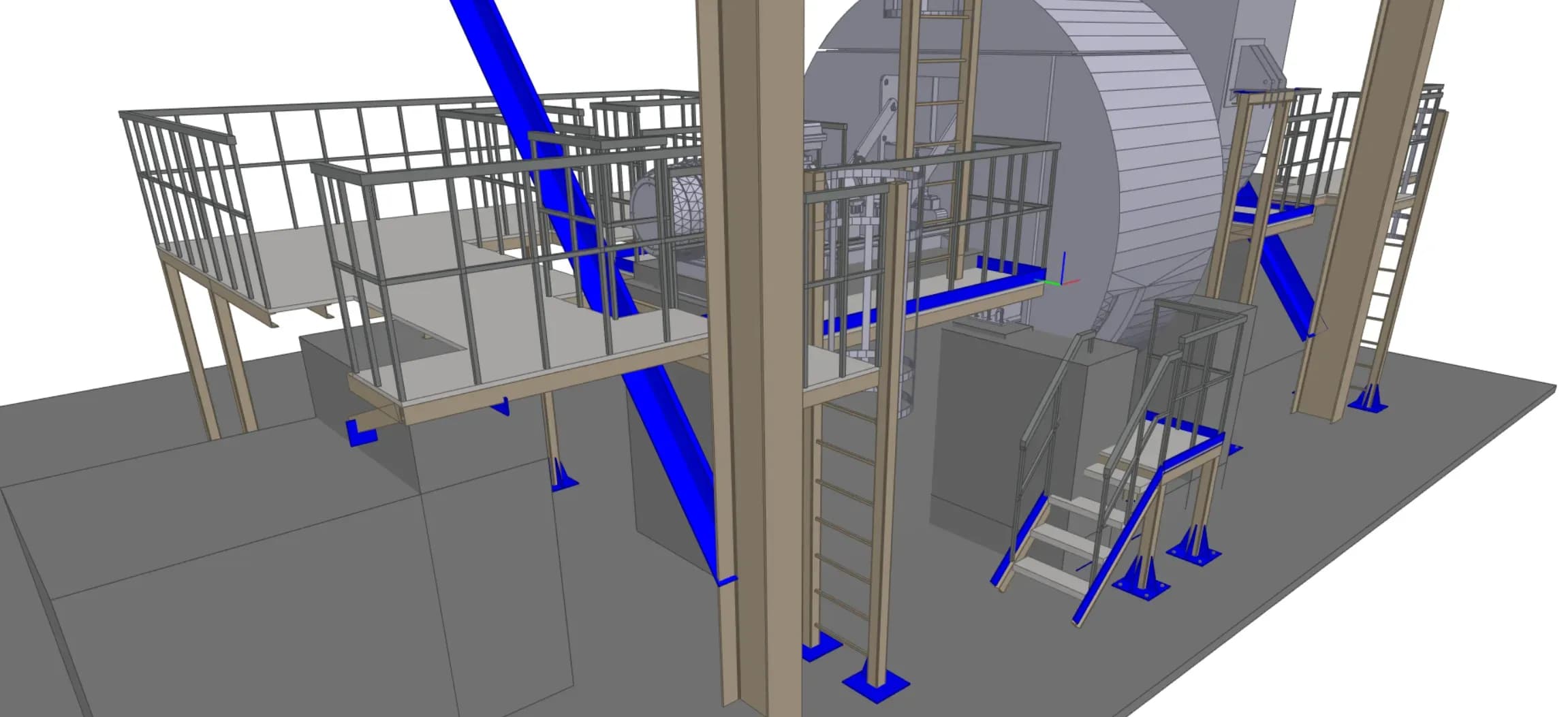
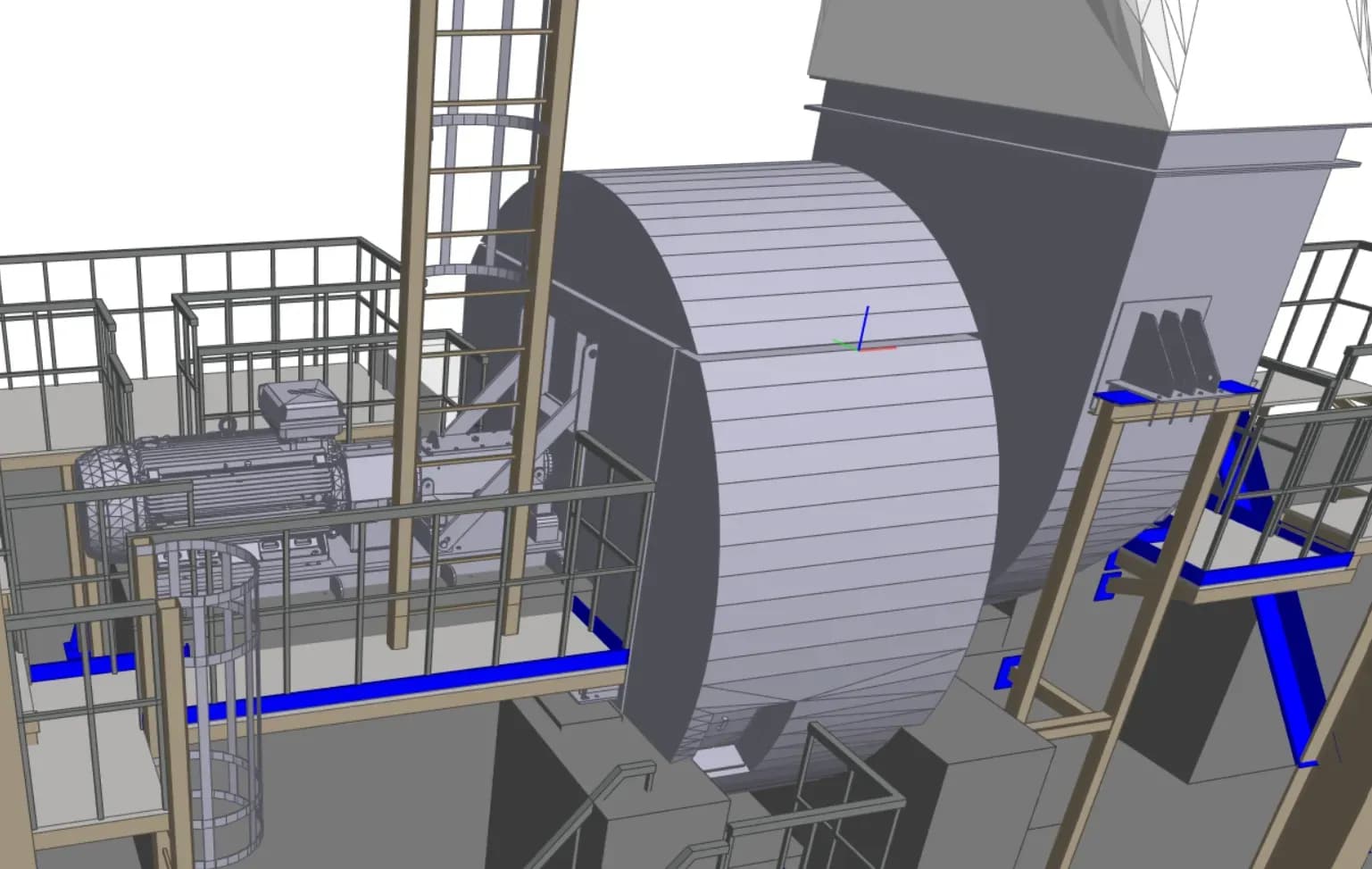
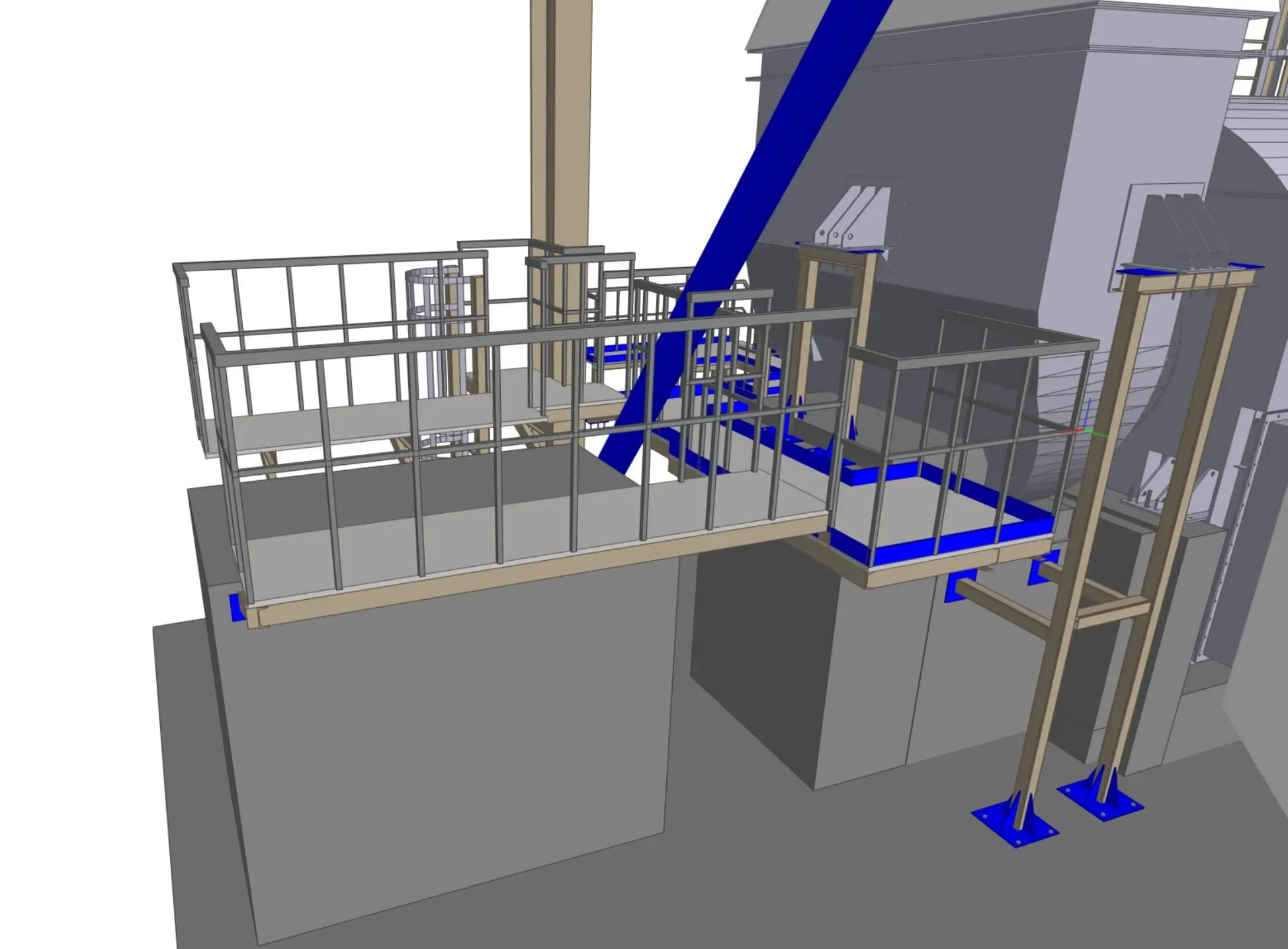
Our engineering firm planned and supervised a project to replace the flue gas extraction system of a boiler in a Bavarian combined heat and power plant. The goal was to dismantle the old flue gas chamber and install a new system on the existing foundations. The existing service areas were preserved, and the new chamber was precisely connected to the existing boiler ducts. Using modern 3D scanning and point cloud technology, the exact placement of components was ensured, and project costs were optimized. A special support and suspension system for the new gas ducts guaranteed stability and functionality. The project included the site survey, creation of a 3D model, structural calculations, and detailed workshop and construction plans to enable efficient execution.
Challenges
The biggest challenge was the precise adaptation of the new flue gas extraction system to the existing structural conditions of the power plant boiler. The confined space and the need to integrate the system into ongoing operations required precise planning, flexible detailing, and the development of an independent support structure for the new gas ducts.
01.06.2020 - 01.08.2020
| Tonnage | 2.4 | tons |
| Planning hours | 230 | hours |
| Total area | 105 | m² |
| Length | 14 | m |
| Width | 7.5 | m |
| Height | 8 | m |
Adress:
Bavaria, Germany
Project phases
Requirements Analysis
In this phase, the technical requirements of the power plant and the conditions for the new flue gas extraction system were analyzed. Special focus was placed on integration into existing foundations and ducts. Interfaces with existing systems and operational processes were also considered in order to incorporate functional, safety-related, and economic objectives early into the planning.
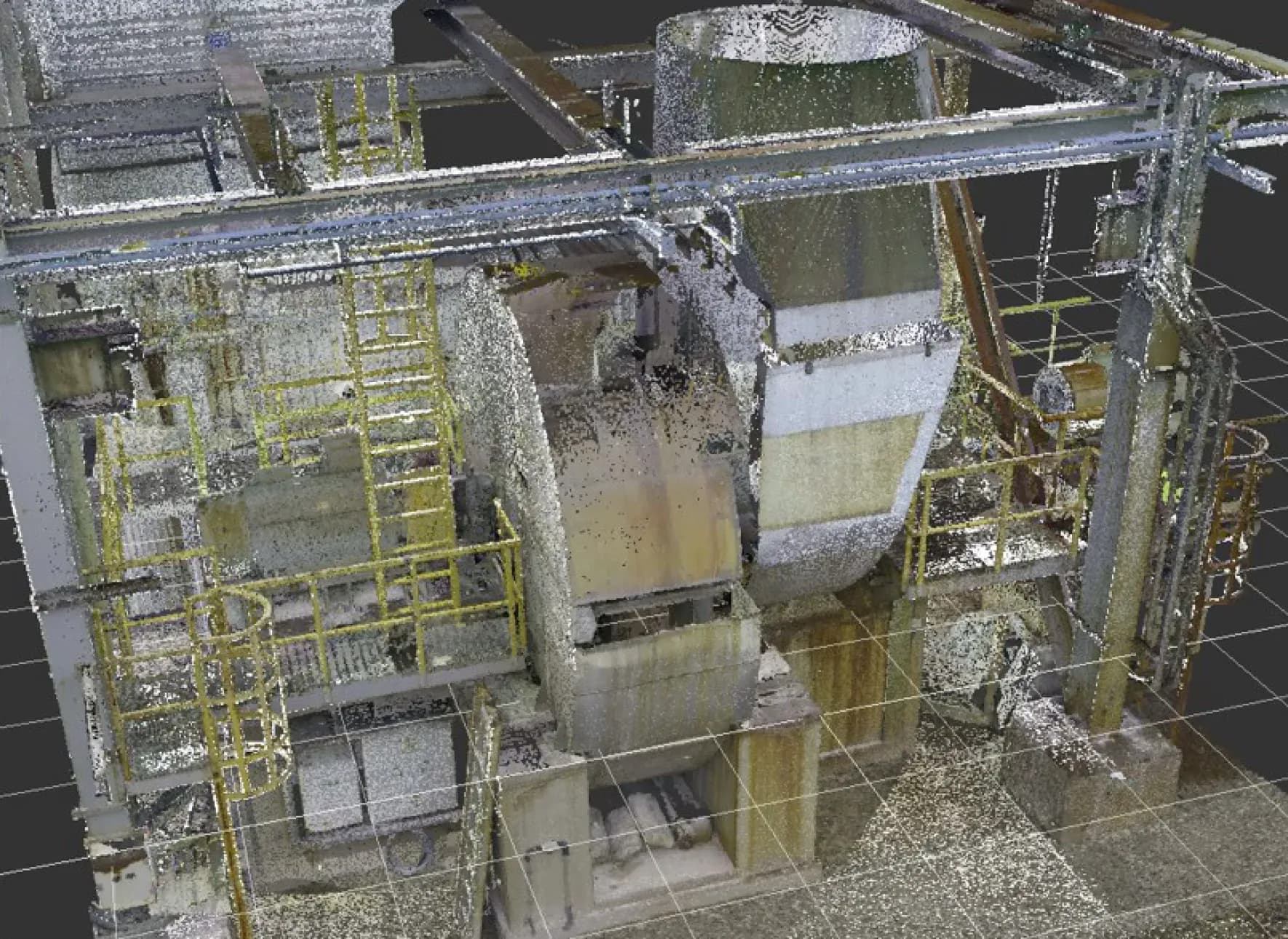
Surveying with 3D Laser Scanning
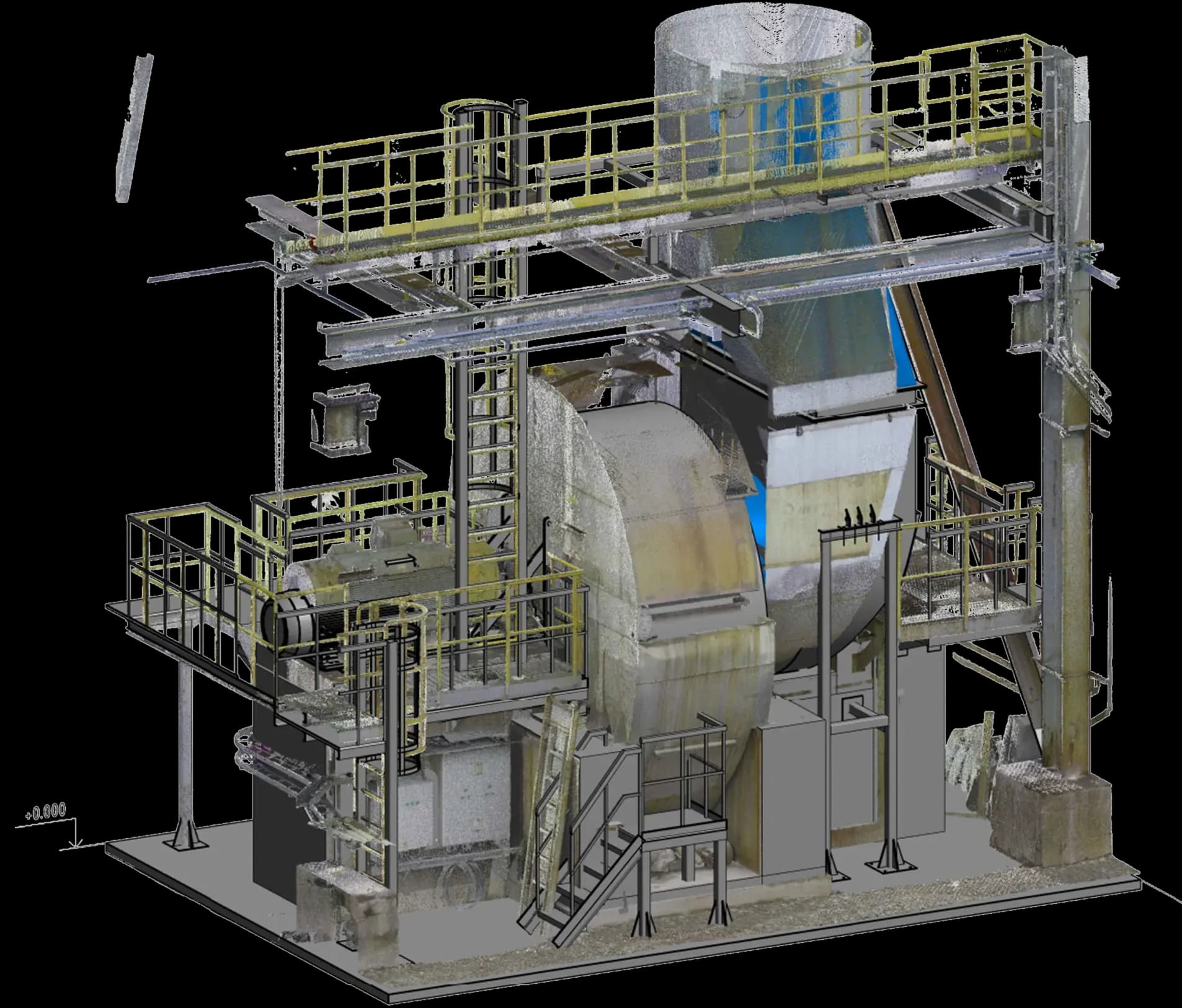
The site assessment was carried out using 3D laser scanning, generating a highly accurate point cloud. It served as the planning foundation and was used for collision checks and detailed analysis. Additionally, photographic documentation supported visual orientation for the entire project team.
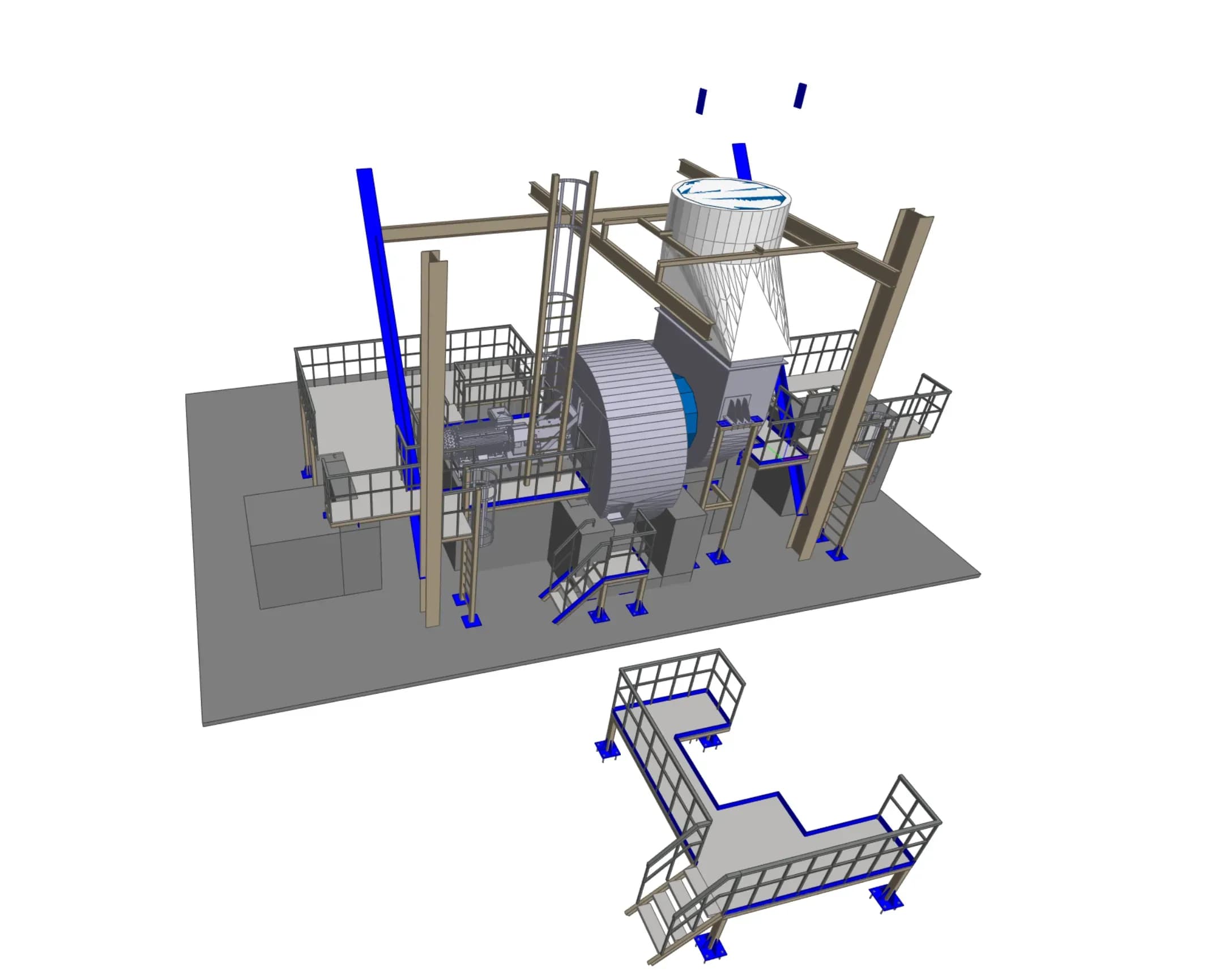
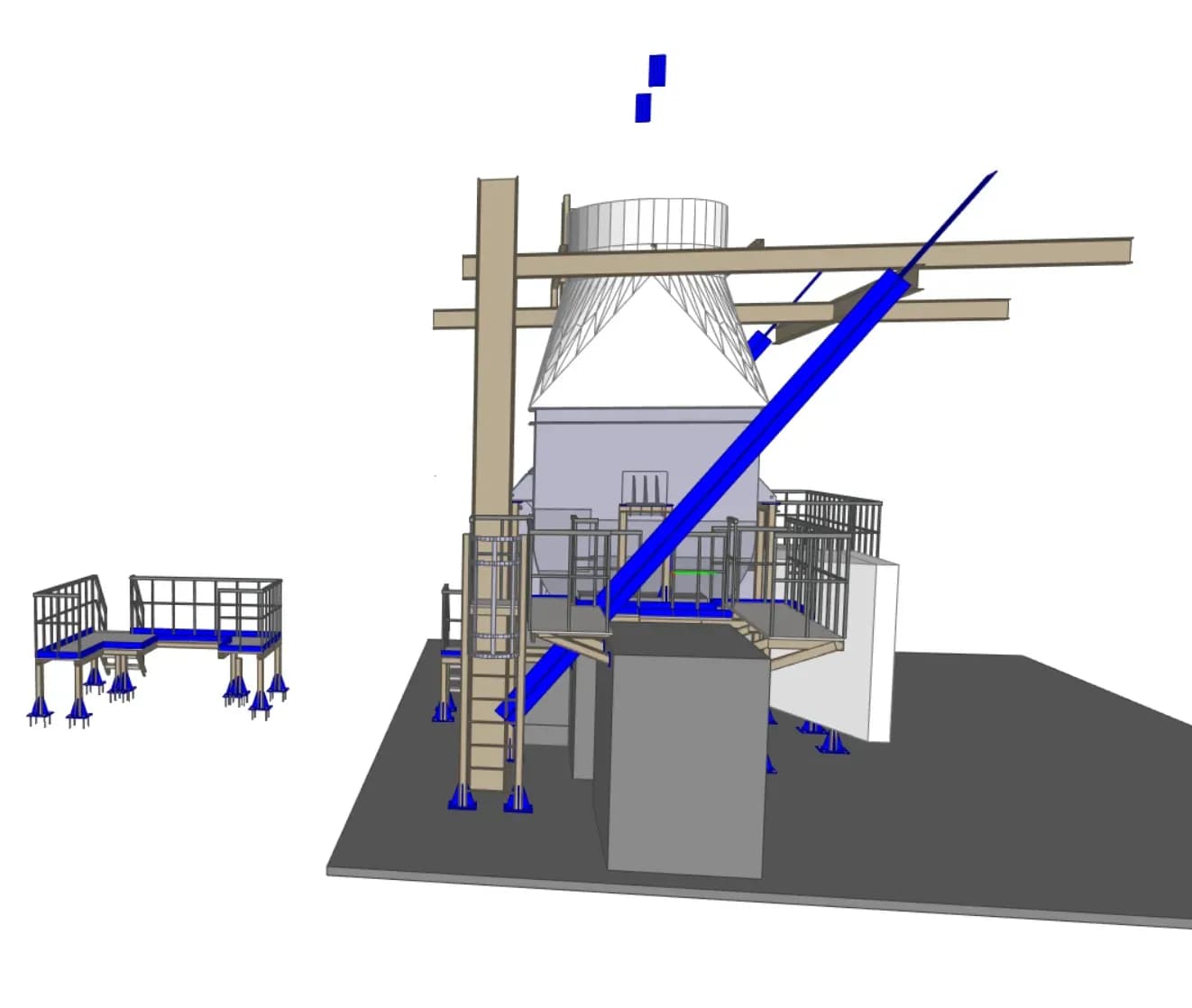
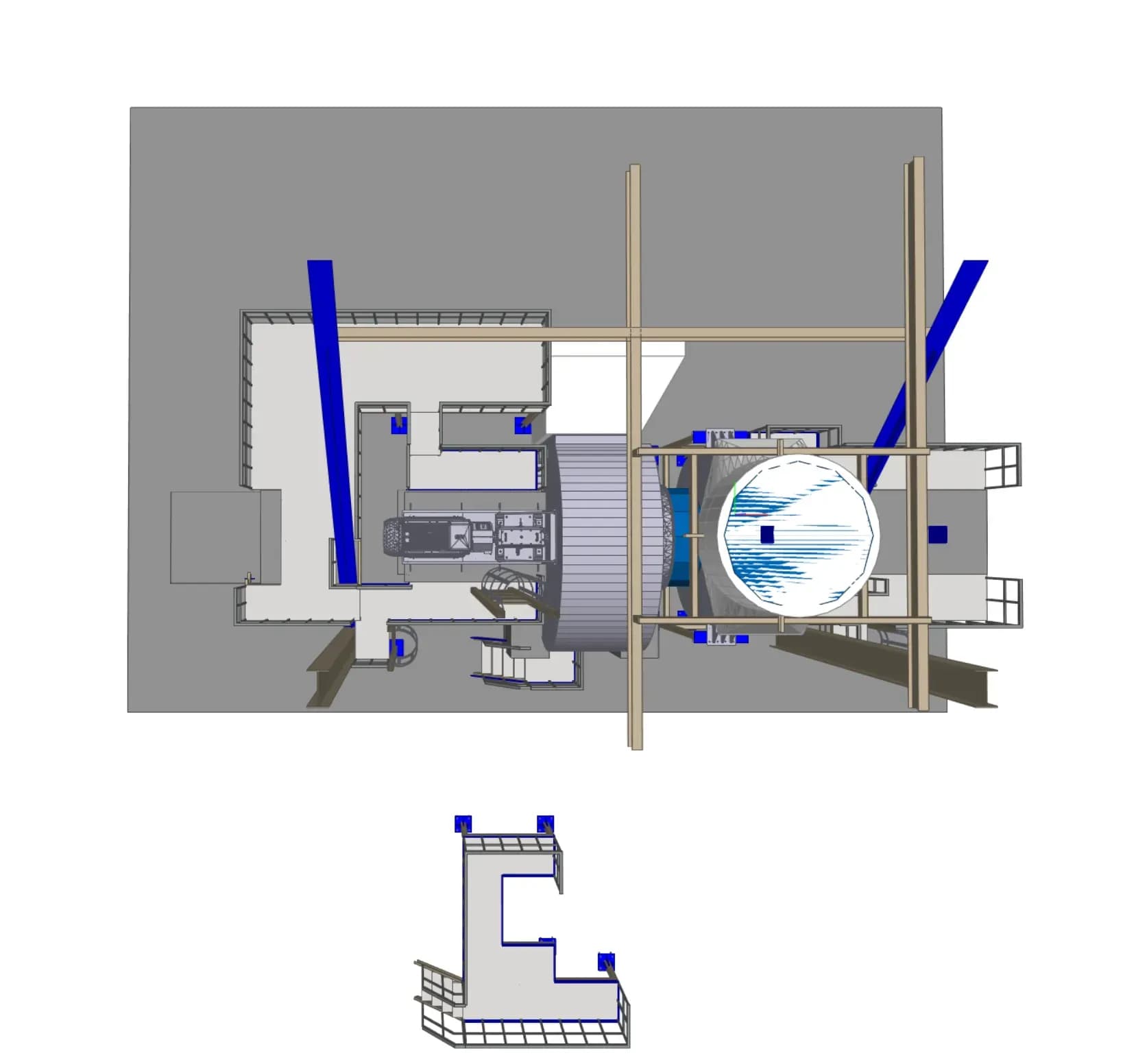
As-Built Modeling
Based on the laser scan data, a digital model was created representing all relevant building structures and system components. It ensured planning reliability—especially for connection details and spatial constraints—and was made available to all disciplines for coordination.
Design Phase LPH 3 and Concept
The concept for the new flue gas extraction system was developed with consideration of technical, economic, and installation-related aspects. Various options were evaluated, and the preferred solution was elaborated in detail. This phase concluded with coordination among the client and involved trades.
Approval Planning LPH 4
The final development of the design took place during the approval planning phase. All required technical documents and structural verifications were prepared, standards were reviewed, and approval documents were compiled. A realistic schedule and inspection plan were also coordinated with all parties involved.
Implementation Planning LPH 5
Workshop and installation drawings were created in this phase to ensure that all components could be manufactured and installed precisely. Installation sequences were coordinated with contractors, crane positions calculated, and all documentation compiled for smooth on-site execution.
Galery