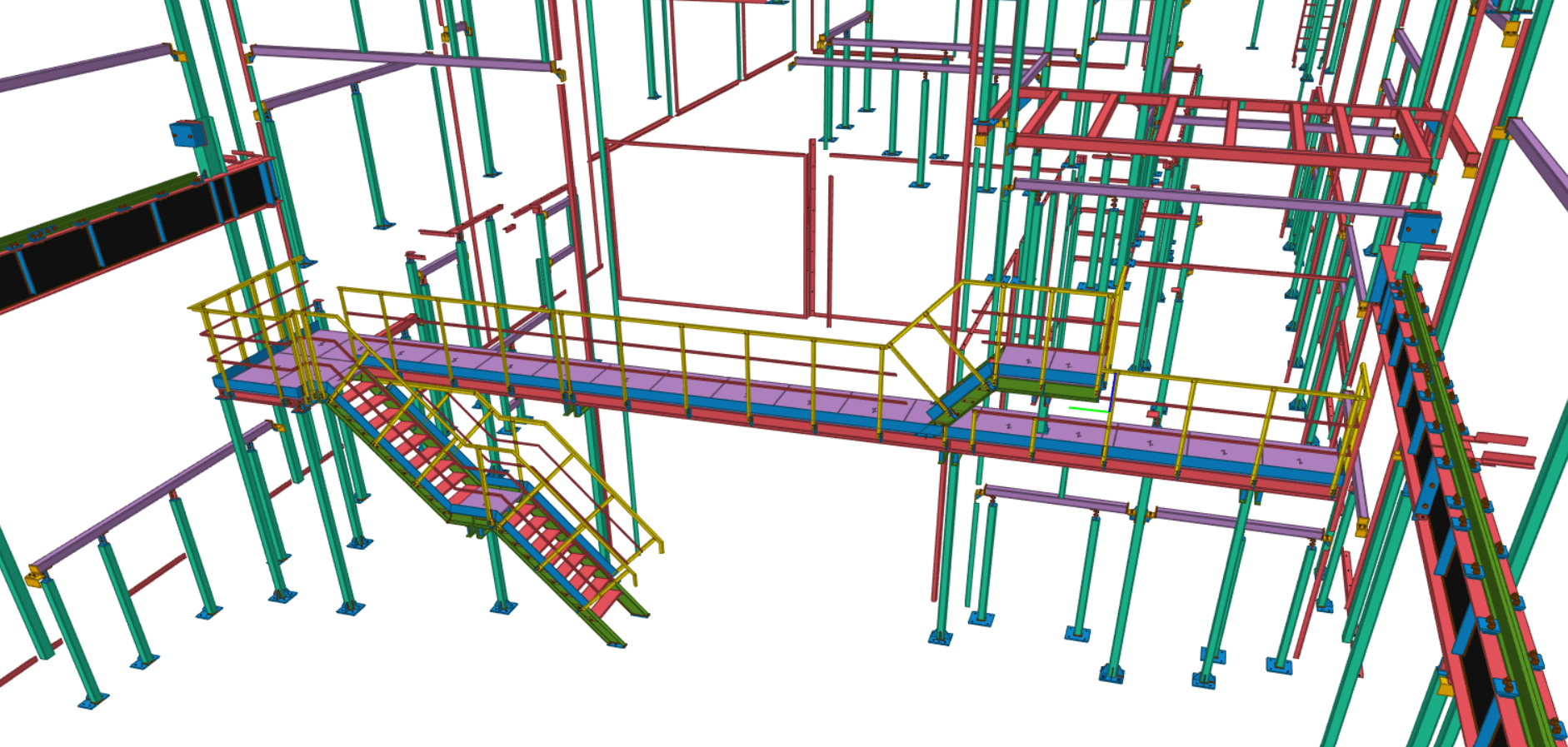
Refurbishment and Service Platforms, Bavaria
The steel structure was specifically designed for use in an existing production facility to enable safe and efficient maintenance of machinery and equipment. Our tasks included a detailed survey of the existing building fabric and current production processes to ensure precise integration of the new structure. Based on this, we created a true-to-scale 3D model that served both for visualization and verification of the planned structures. The structural engineering (static analysis) was carried out considering the loads and special requirements of the site. Subsequently, workshop drawings and detailed assembly plans were prepared to ensure smooth fabrication and installation of the steel structure.
Challenges
One of the major challenges was adapting the new steel structure to the existing building conditions and the facility's limited space constraints. Due to the high demands on structural integrity and safety, customized solutions for the load-bearing design had to be developed. The ongoing operation of the facility further complicated implementation, as noise control and safety measures had to be observed to avoid disrupting production.
01.02.2021 - 01.09.2021
| Structural steel weight | 7.5 | metric tons |
| Engineering hours | 280 | hours |
| Total platform area | 1470 | m² |
| Length | 79.5 | m |
| Width | 18.5 | m |
| Height | 12.5 | m |
| Load capacity | 3.5 | kN/m² |
Adress:
Bavaria, Germany
Project phases
Requirements Analysis
In this initial phase, the project requirements were recorded and analyzed in detail. Together with the client, the target specifications were defined, including capacity requirements, safety standards, and specific guidelines for the steel structure. This analysis forms the basis for all subsequent planning phases and ensures that the project meets all technical, economic, and regulatory requirements.
3D Laser Scanning Survey
To capture the exact geometry of the terrain and existing structures, comprehensive 3D laser scanning was performed. This technique enables highly precise measurements and provides a reliable foundation for the digital model used in later planning phases. The collected data captures every detail of the existing conditions, facilitating the exact integration of the new steel structure.
As-Built Modeling
Based on the laser scan data, a digital 3D model of the existing conditions was created, representing all relevant components of the current structure and surrounding terrain. This model serves as the basis for precise planning and is crucial for structural calculations and coordination with other trades.
Preliminary Design (LPH 3)
A preliminary design was created according to Service Phase (LPH) 3 of HOAI. The design includes fundamental planning concepts for the steel structure, including the arrangement of load-bearing components, access routes, and connection points. The design was developed to be both functionally and economically optimized for gasoline production.
Approval Planning (LPH 4)
In the approval planning phase (Service Phase 4), the design was further detailed to meet permit requirements. All necessary documents and verifications, including detailed structural calculations, were prepared to obtain project approval. This approval planning forms the formal basis for execution planning.
Execution Planning (LPH 5)
In the execution planning phase (Service Phase 5), the steel structure was fully detailed, including comprehensive workshop drawings and assembly plans. The workshop drawings specify the manufacturing of each steel component, while the assembly plans precisely describe on-site erection. These plans serve as exact instructions for contractors and project managers to ensure efficient and error-free implementation of the construction project.
Galery
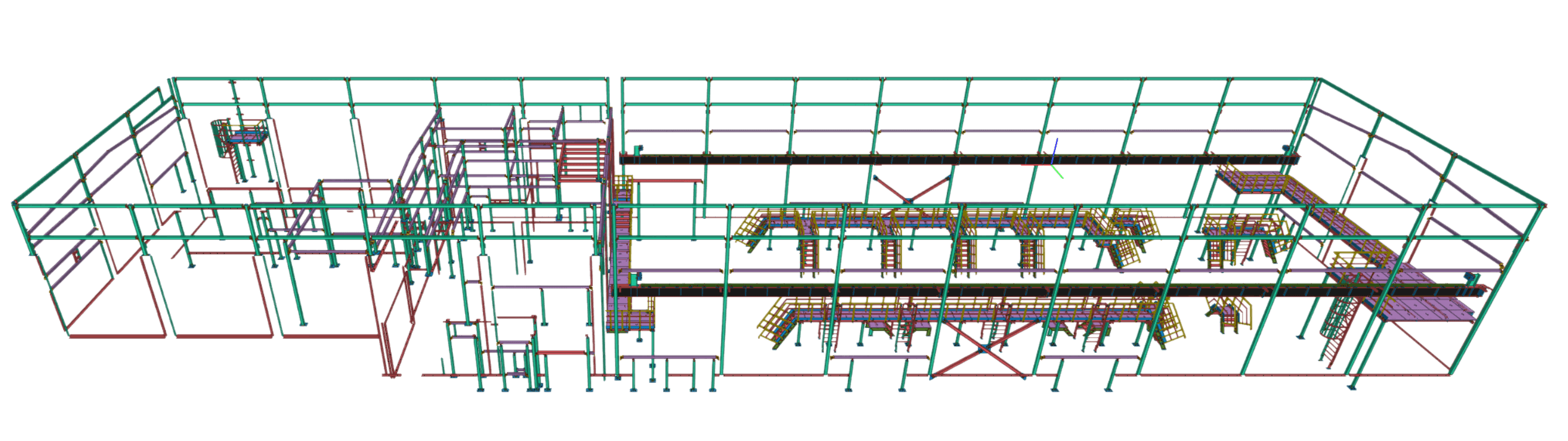
Main view
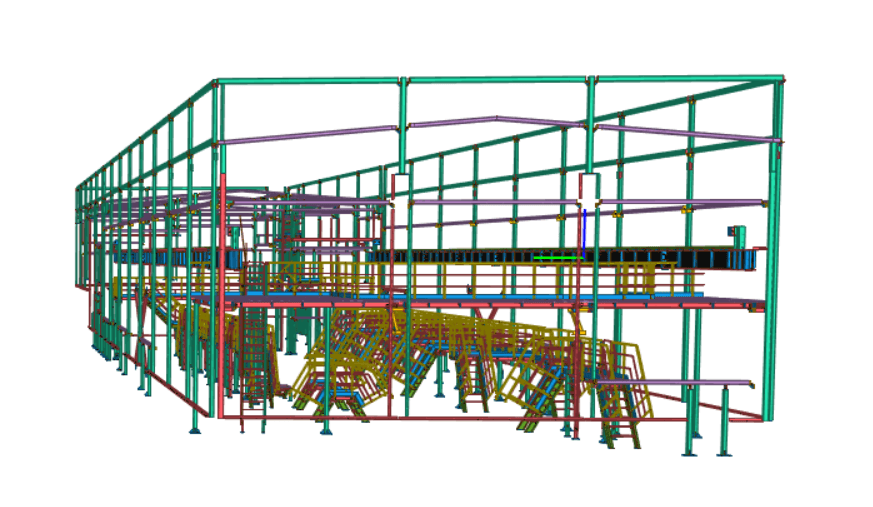
View from right side
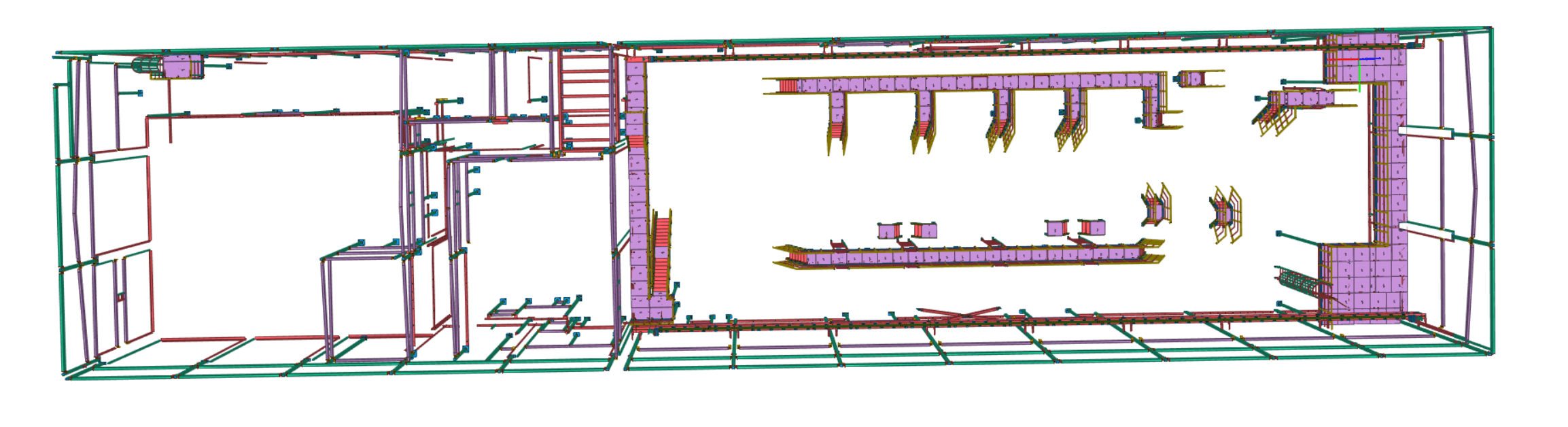
Upper view
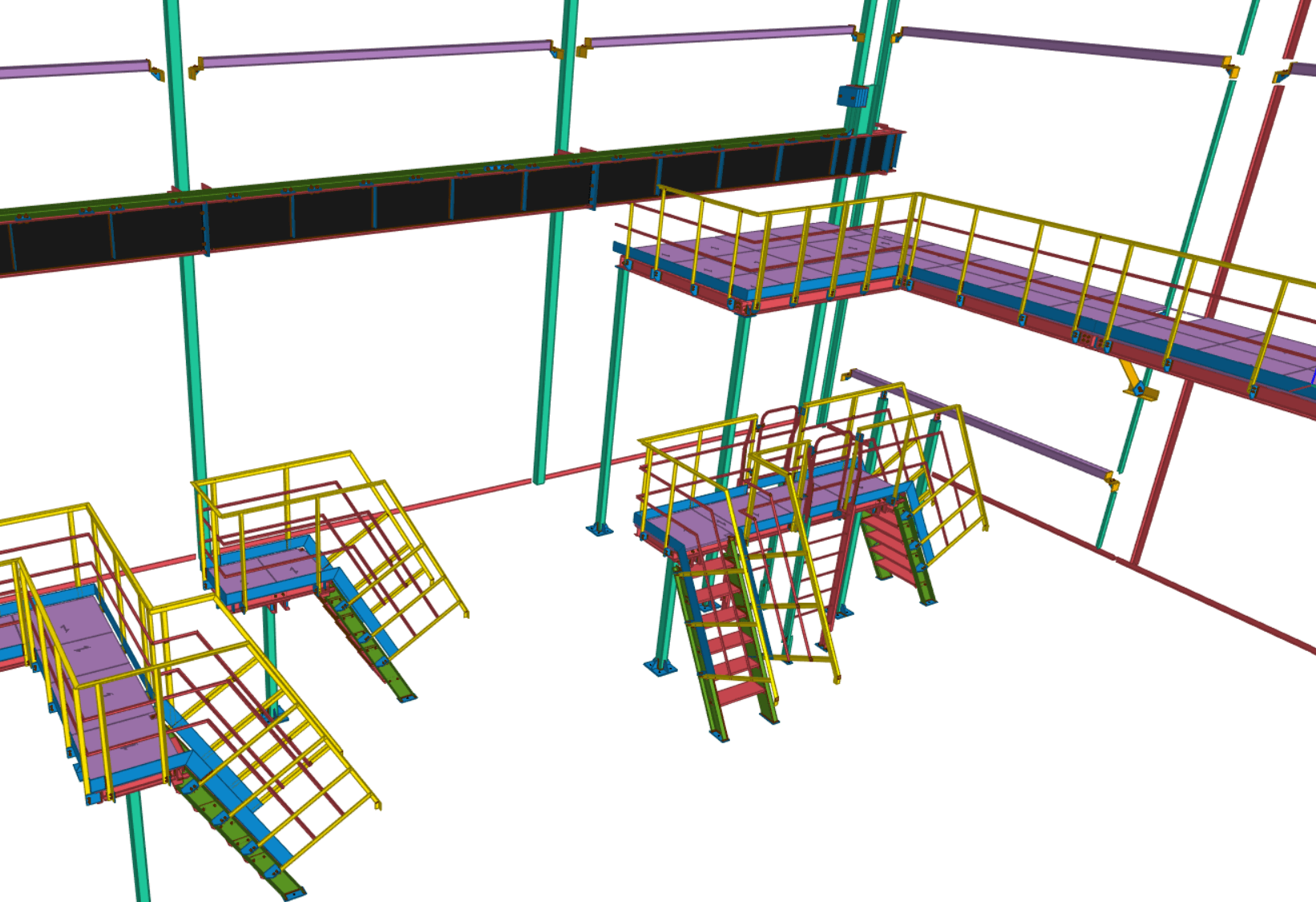
Working platforms
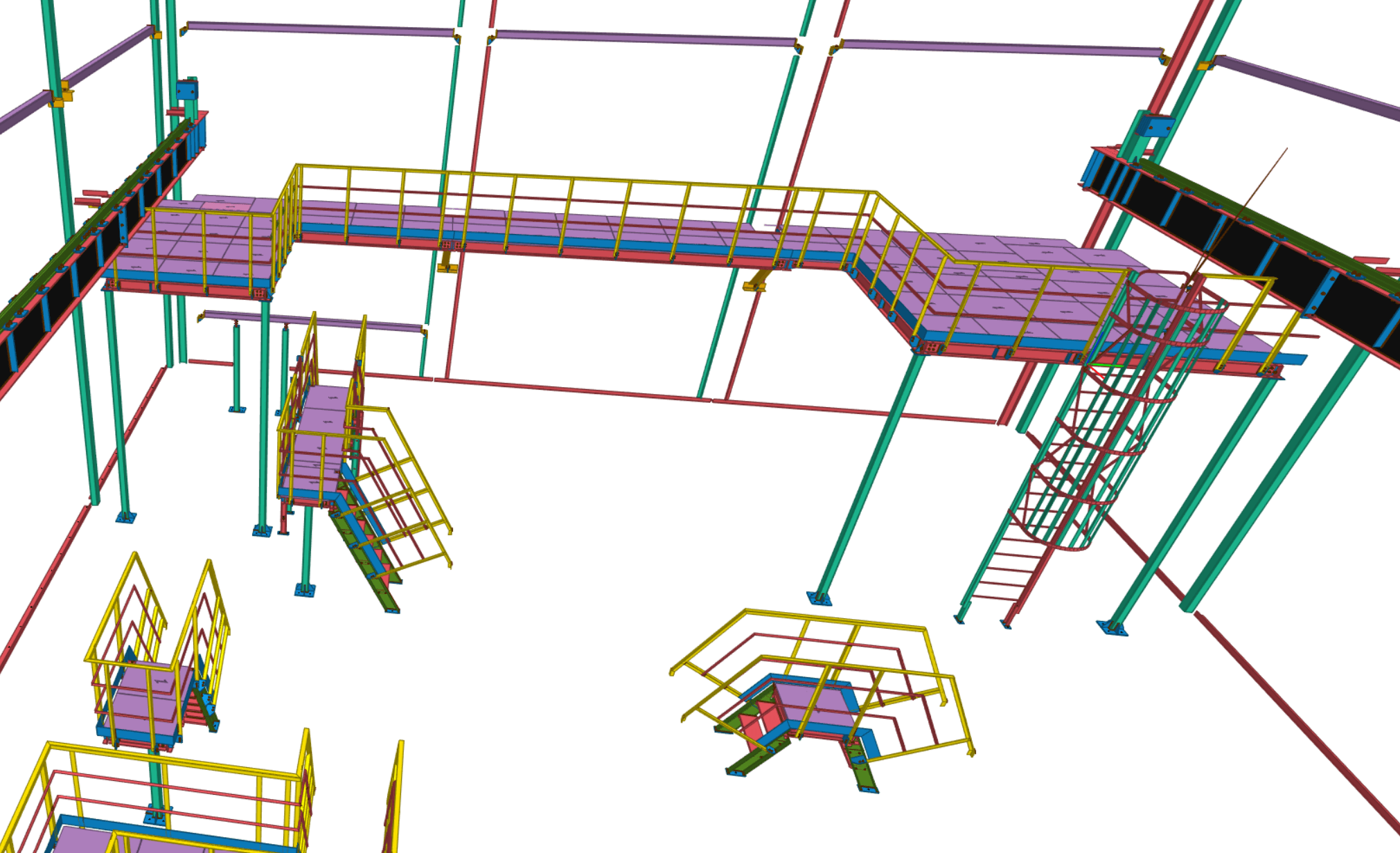
Working platform on 2nd floor
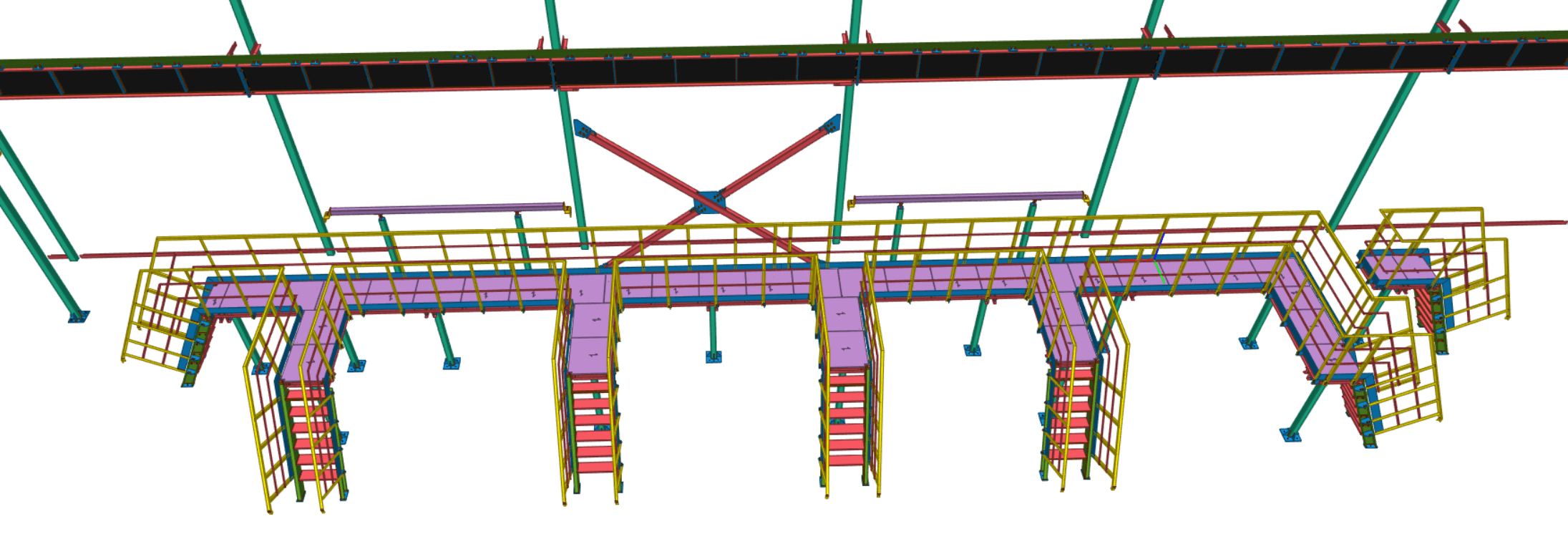
Rear working platform
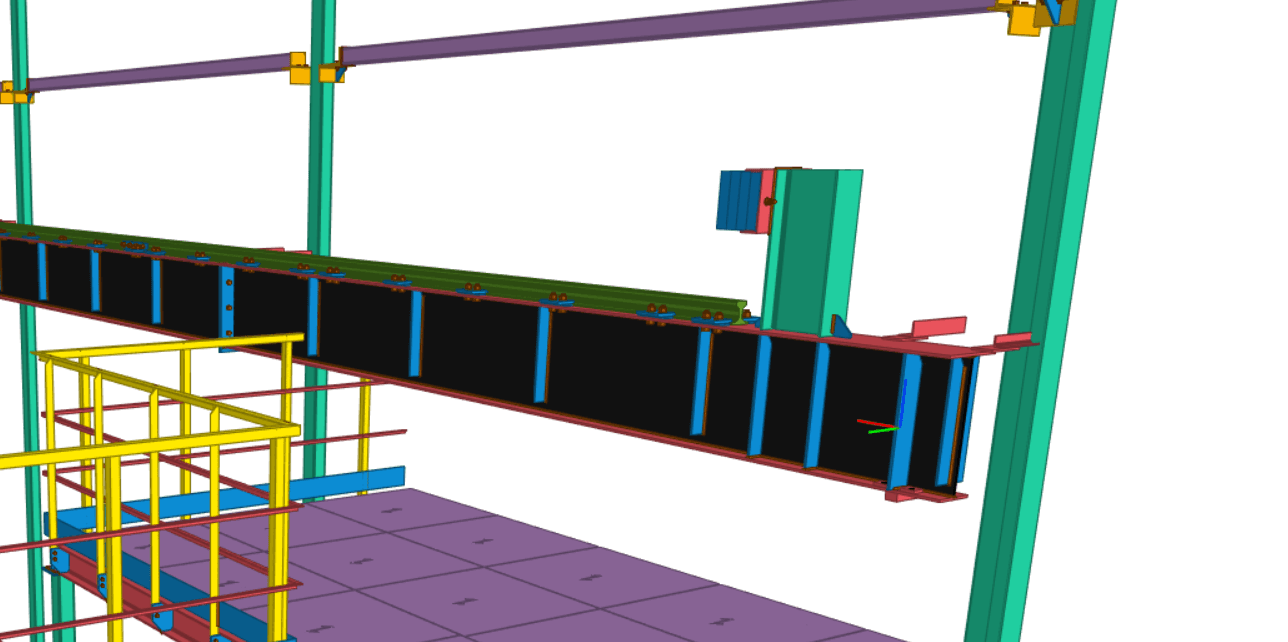
Crane carrier
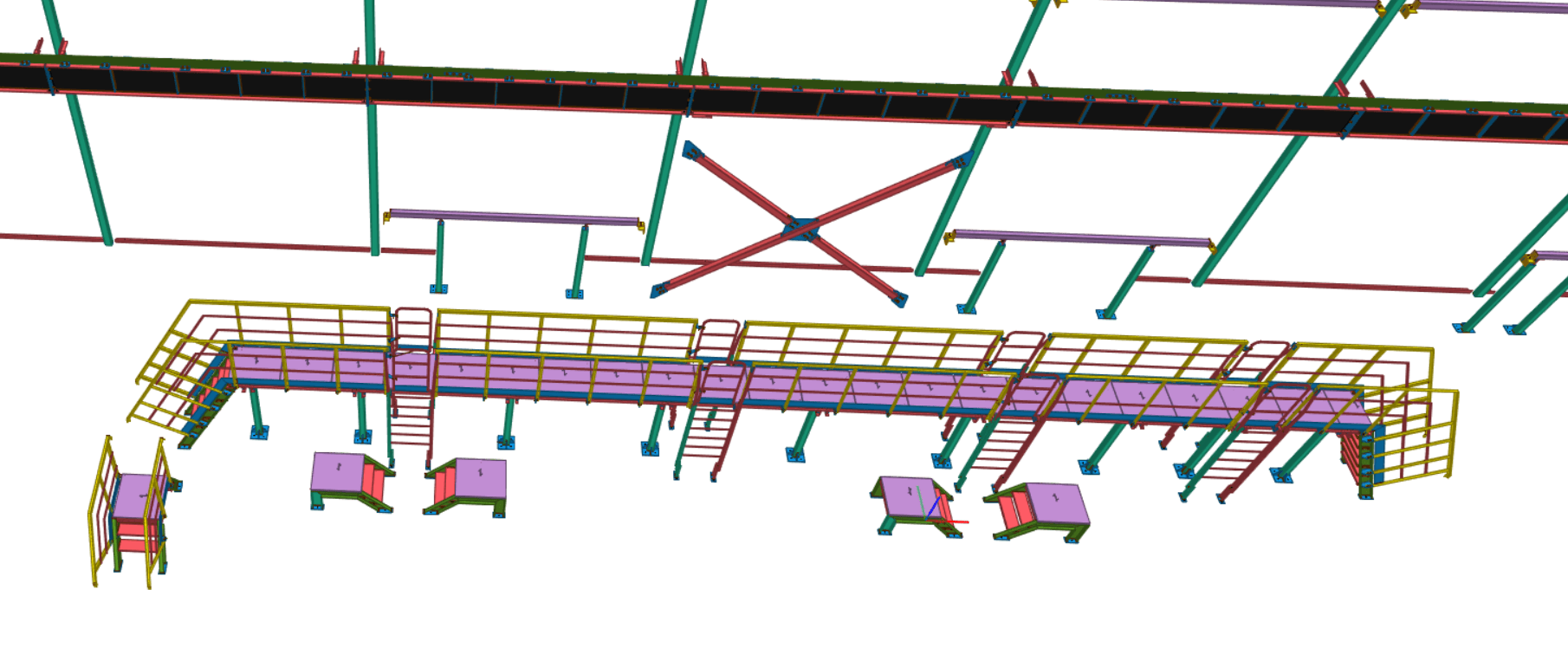
Front working platform