Service Platforms, Bavaria
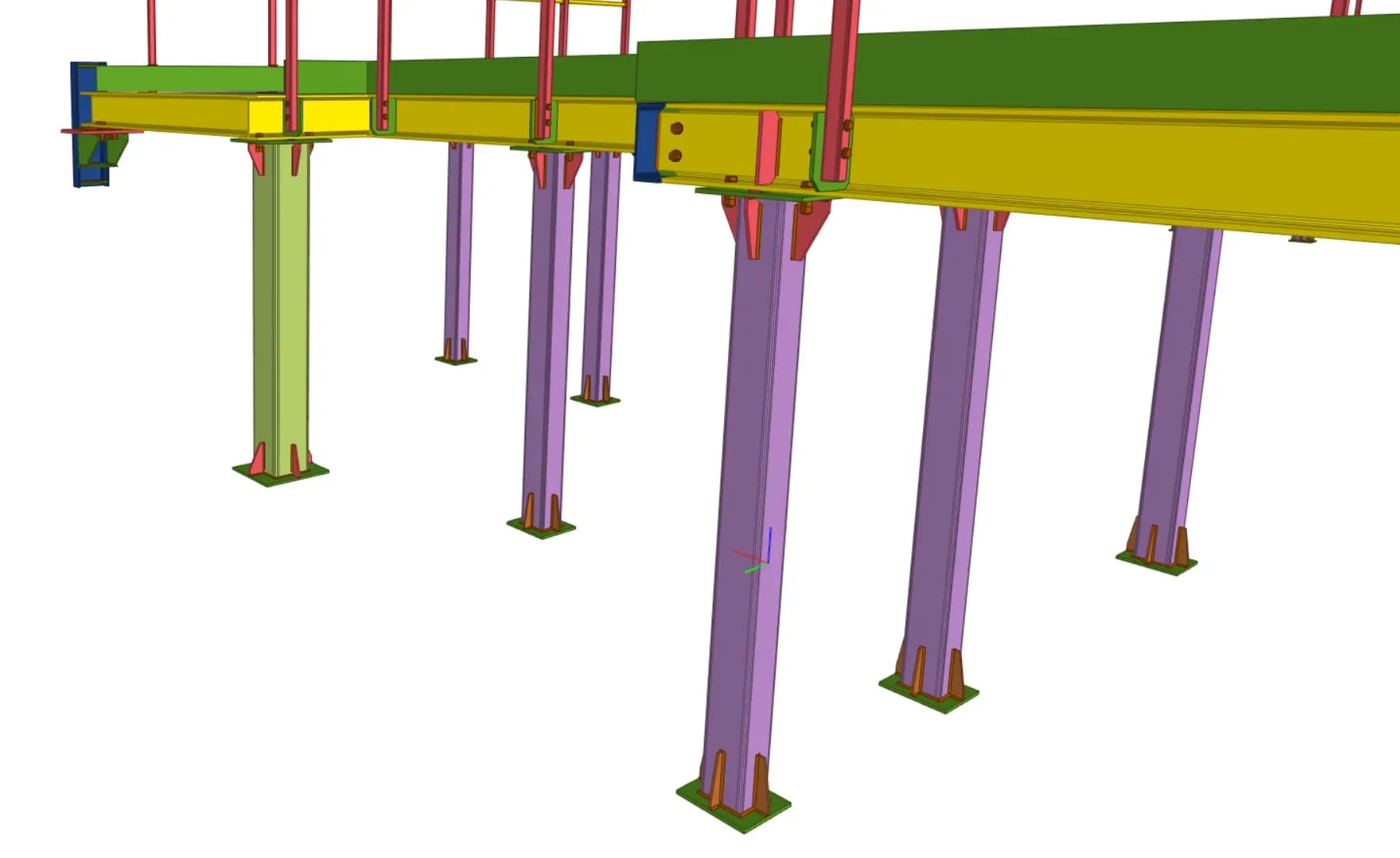
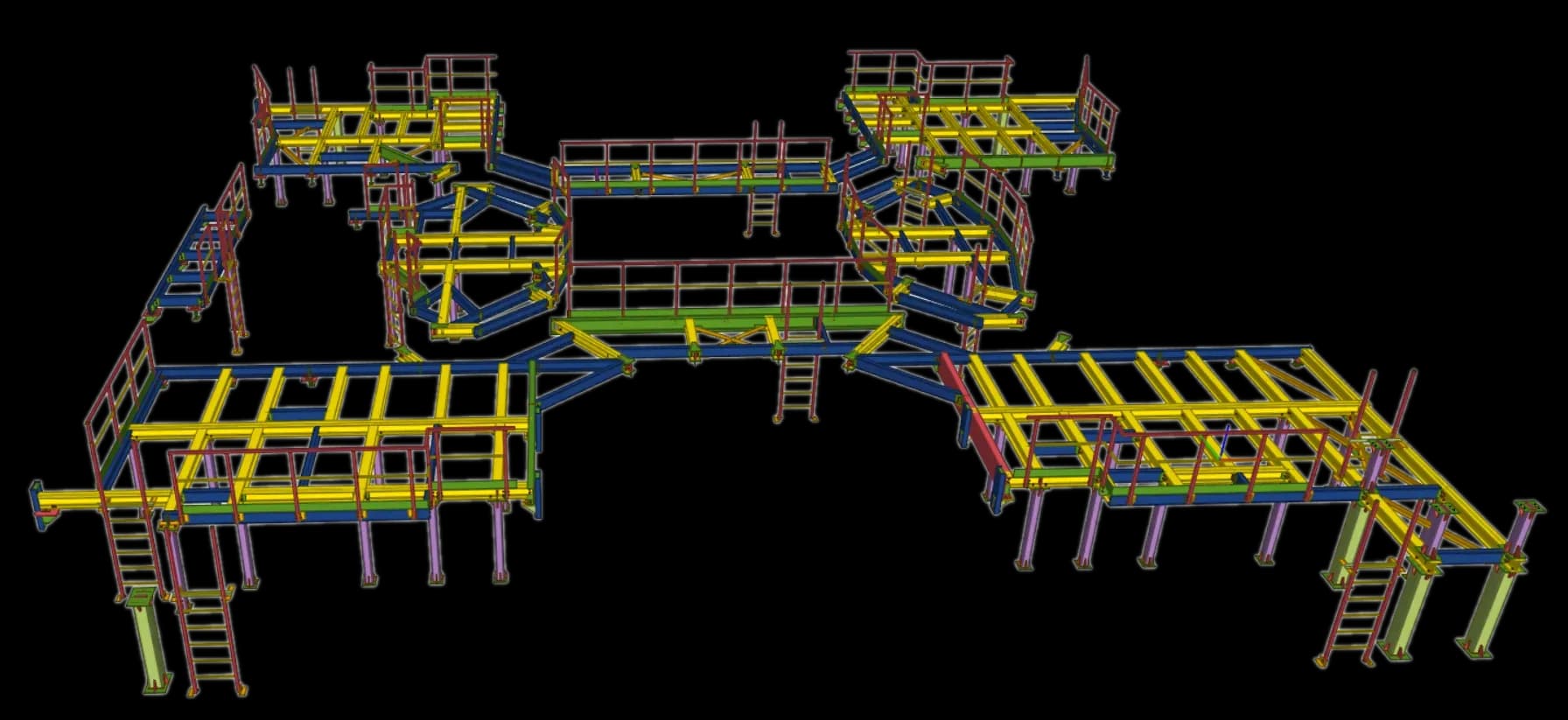
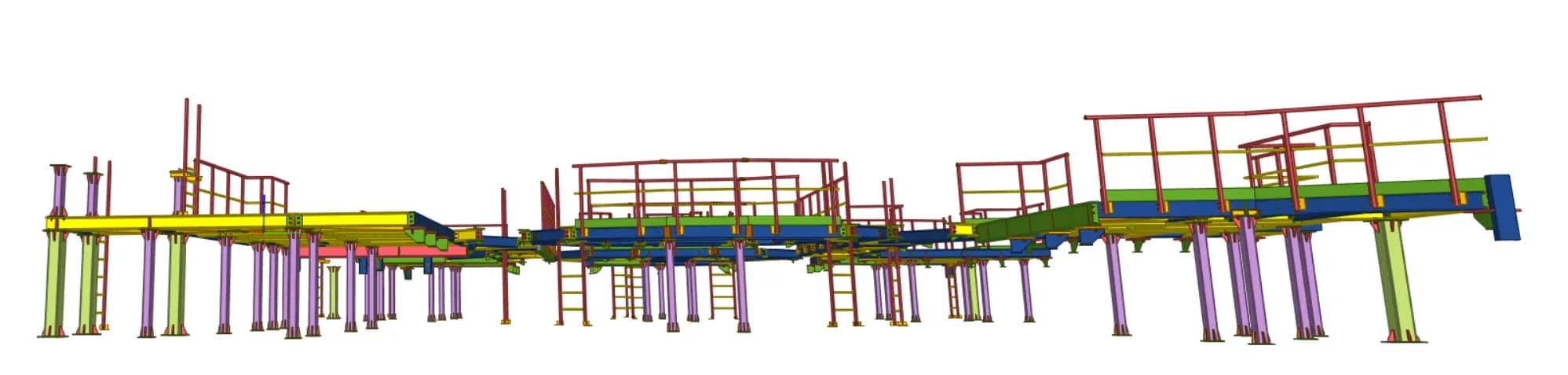
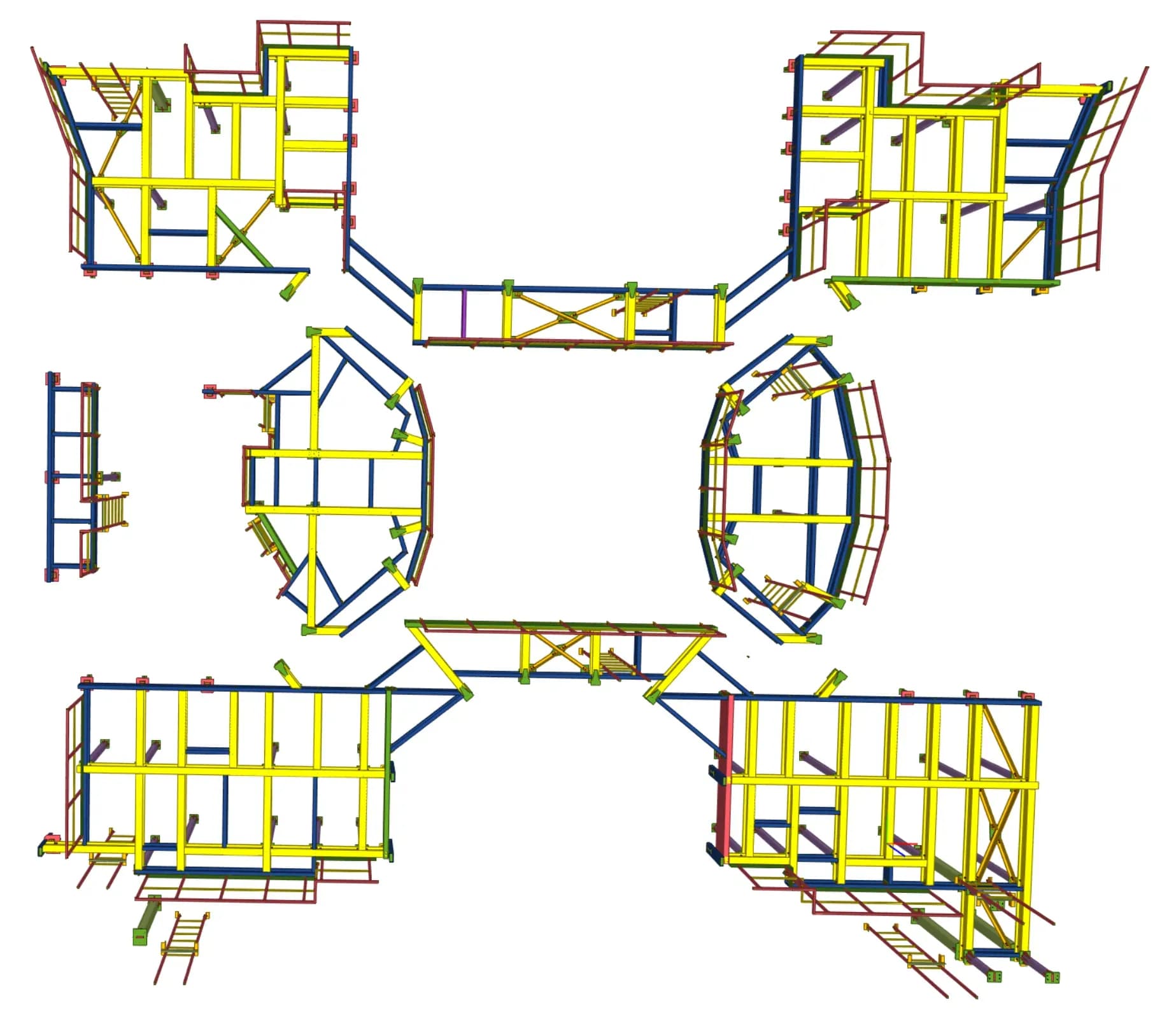
The steel structures provide safe access and facilitate the operation of production facilities as well as the maintenance of machinery on various levels of the production hall. Our scope of services included a detailed survey of the plant building and the creation of a precise 3D model of the structures. Based on this model, we performed structural calculations and developed robust workshop and assembly drawings. Specific requirements regarding load-bearing capacity and safe operation of the platforms according to applicable safety standards were taken into account. The planning and implementation were carried out in close coordination with the trades involved to ensure precise integration into the existing infrastructure.
Challenges
One of the major challenges in this project was adapting the steel structures to the complex spatial conditions of the existing building, which was already equipped with numerous supply lines, machines, and installations. This required precise surveying and modeling as well as close coordination with other trades to integrate the service platforms without disrupting ongoing production. Furthermore, the structural calculations had to be adjusted to accommodate high loads and vibration requirements, necessitating careful balancing between safety and material efficiency.
01.07.2021 - 01.12.2021
| Tonnage | 6.5 | tons |
| Planning hours | 245 | hours |
| Total area | 440 | m² |
| Length | 22 | m |
| Width | 20 | m |
| Height | 4 | m |
Adress:
Bavaria, Germany
Project phases
Requirements Analysis
In this phase, all project requirements were captured and analyzed in detail. Together with the client, we defined the functional and safety requirements of the service platforms to ensure an optimal solution for the intended use in the industrial plant. This included specifications for load capacity, accessibility, and integration into ongoing operations.
Surveying with 3D Laser Scanning
To create an exact basis for planning, a comprehensive survey was conducted using 3D laser scanning. This high-precision measurement method enabled us to capture both the spatial structure of the building and relevant details such as supply lines and existing machinery with millimeter accuracy.
As-Built Modeling
Based on the scanned data, a complete 3D model of the existing structure and all relevant elements was created. This as-built modeling was crucial for precisely integrating the service platforms into the existing infrastructure and identifying potential conflicts with other structural elements at an early stage.
Design Phase (LPH 3) and Concept
During the design phase, we developed the conceptual design of the service platforms. The previously analyzed requirements were translated into design plans and visualizations that gave the client a concrete understanding of the planned structures. The design was also checked for technical feasibility and prepared for subsequent approval planning.
Approval Planning (LPH 4)
In the approval planning phase, the concept was elaborated in detail and all approval documents were compiled. These plans formed the basis for official approval and ensured that the steel structures met all construction and safety regulations.
Execution Planning (LPH 5)
During execution planning, detailed workshop and assembly drawings were created, containing all necessary information for the fabrication and installation of the steel structures. These plans ensured smooth manufacturing and assembly processes and guaranteed that all construction activities met the project's high-quality standards.
Galery
Main view
View from right side
Upper view
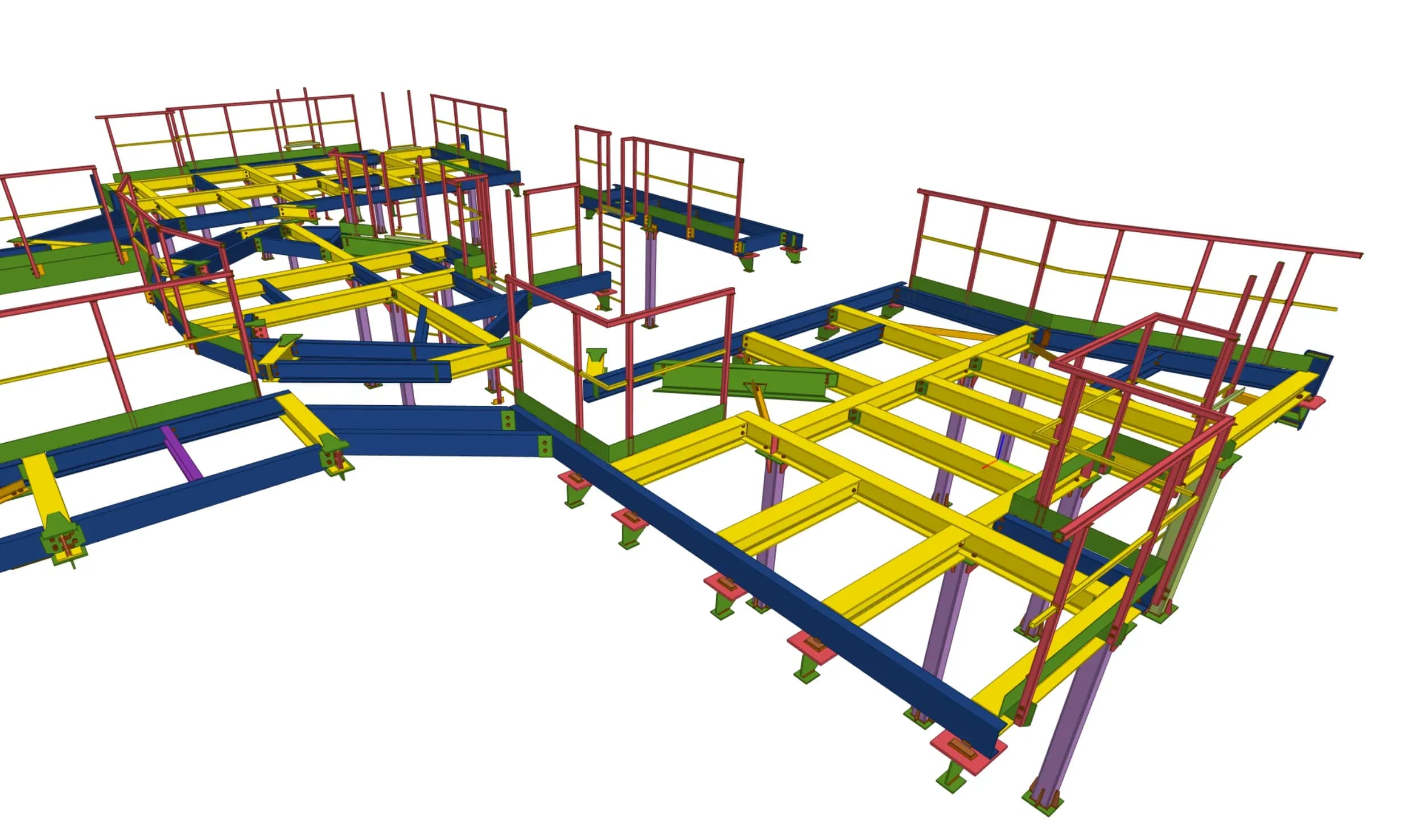
Working platforms
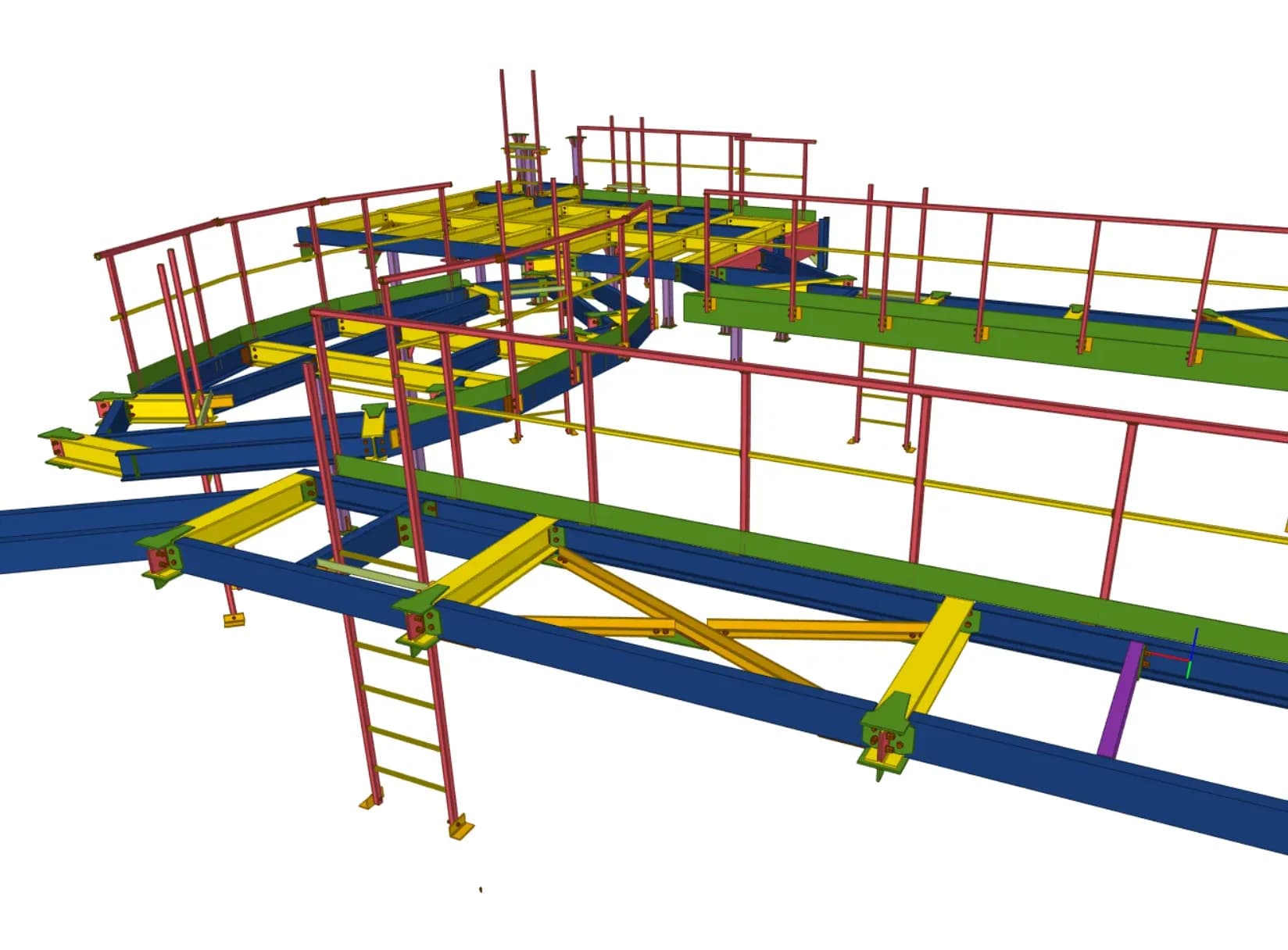
Working platforms in the middle
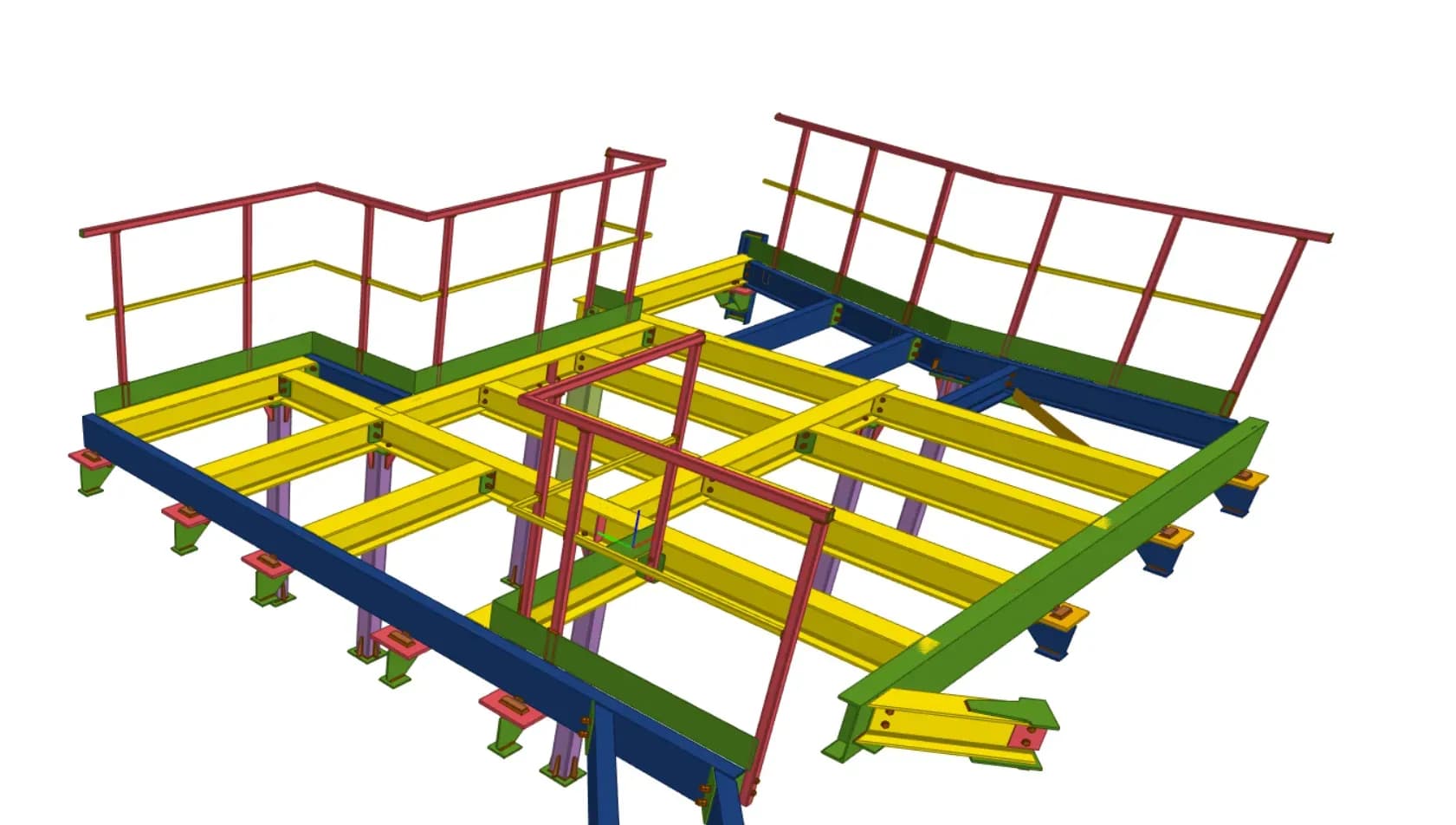
Working platforms